
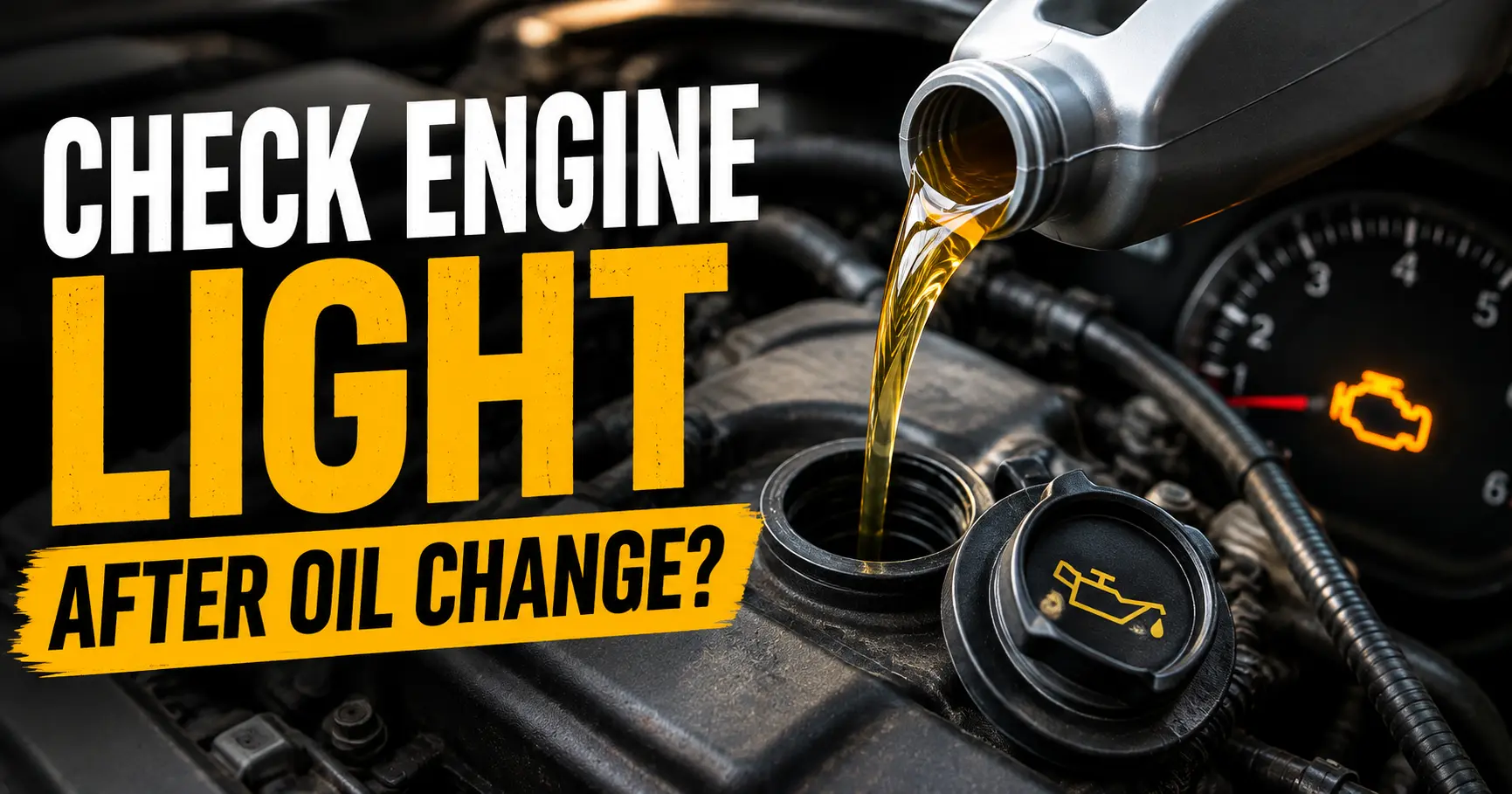
If your Check Engine Light came on after an oil change, don’t assume the oil change itself damaged your engine. In many cases, the warning is triggered by a simple service-related issue, such as a loose Oil Filler Cap, an incorrect Engine Oil level, or a sensor connector accidentally left loose during maintenance. However, because the Engine Control Unit (ECU) detected a fault, the warning should never be ignored.
A Check Engine Light after an oil change doesn’t always mean there’s a serious mechanical problem, but it does mean your vehicle has stored one or more Diagnostic Trouble Codes (DTCs) that should be investigated. The sooner you identify the cause, the easier and less expensive the repair is likely to be.
In this article, you’ll learn the most common causes, how to inspect your vehicle, what you can safely fix yourself, and when it’s time to return to the repair shop.
Quick Answer
A check engine light after oil change is most commonly caused by a loose Oil Filler Cap, an incorrect oil level, a disconnected sensor, or another issue that occurred during the service. Start by checking these items first, then scan the Engine Control Unit (ECU) with an OBD-II Scanner if the warning remains. If the light is flashing or the engine runs poorly, stop driving and have the vehicle inspected immediately.
Why Is My Check Engine Light On After an Oil Change?
Many drivers ask, “Why is my check engine light on after oil change?” The good news is that the oil change itself rarely causes the warning.
Instead, the Engine Control Unit (ECU) detects an abnormal reading from one of the engine or emissions systems shortly after the service. This can happen if something was accidentally left loose, installed incorrectly, or disturbed while changing the oil or inspecting the engine bay.
In some cases, the timing is simply a coincidence. A failing Oxygen Sensor, worn ignition component, or another existing fault may reach the point where the Malfunction Indicator Lamp (MIL) illuminates shortly after the oil change.
Before assuming the worst, perform a basic inspection. Many post-service warning lights are resolved within minutes without replacing any parts.
Most Common Causes of a Check Engine Light After an Oil Change
1. Loose or Improperly Installed Oil Filler Cap
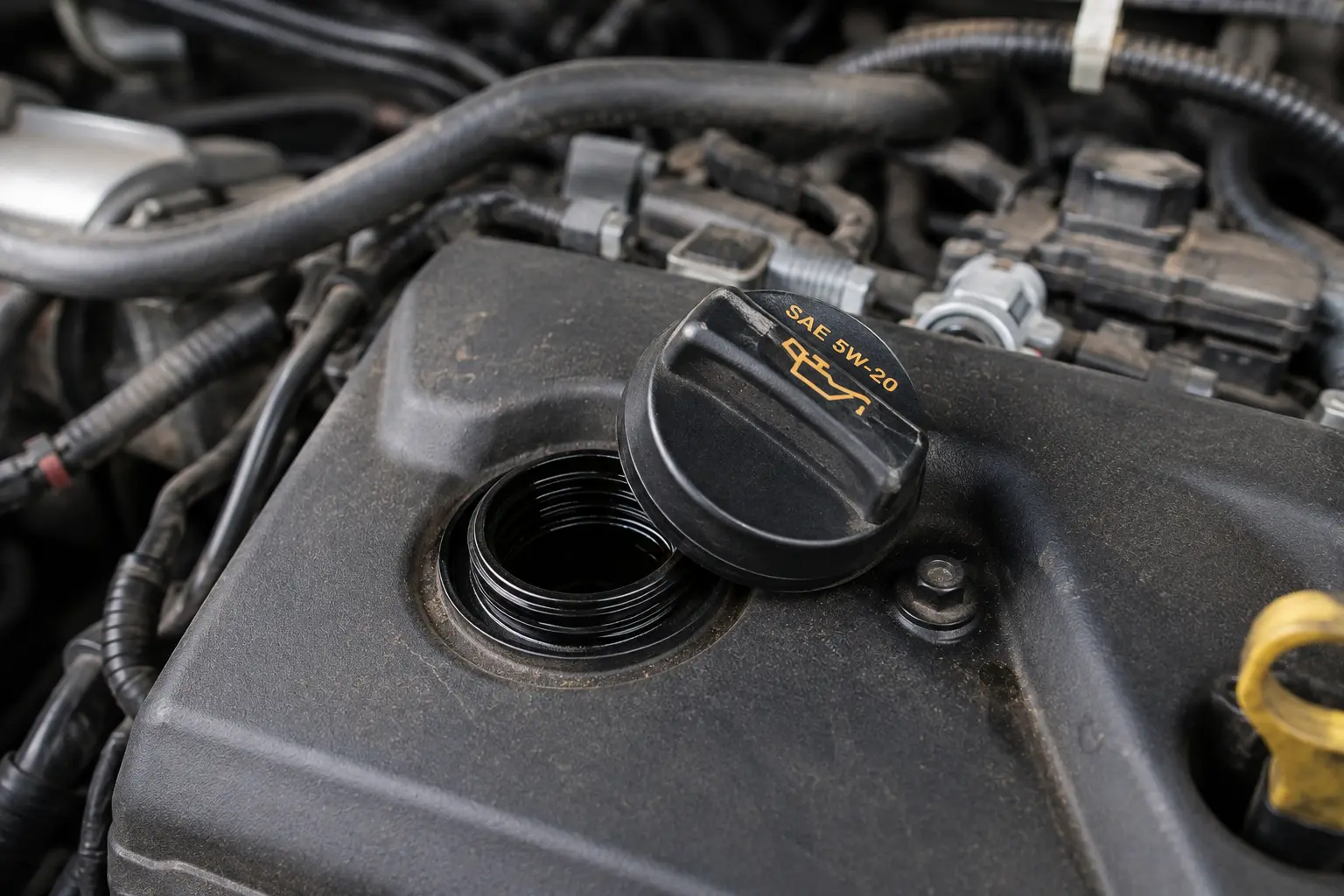
A loose Oil Filler Cap is the most common reason a check engine light came on after oil change.
Why It Happens
If the cap isn’t tightened correctly or the seal is damaged, excess air can enter the engine through the Positive Crankcase Ventilation (PCV) System, creating a Vacuum Leak. The ECU may interpret this as a Lean Fuel Condition, store Diagnostic Trouble Codes (DTCs) such as P0171 or P0174, and illuminate the warning light.
Common Symptoms
- Check Engine Light stays on
- Oil smell around the engine bay
- No noticeable change in engine performance
- Possible rough idle on some vehicles
How to Fix It
Remove the Oil Filler Cap, inspect the rubber seal for cracks, and reinstall it until it clicks securely into place. If the seal is worn or damaged, replace the cap. After correcting the problem, scan the vehicle with an OBD-II Scanner or allow the ECU to complete several Drive Cycles.
Is It Safe to Drive?
Yes, for a short distance if the engine runs normally. However, repair the problem as soon as possible to prevent additional faults.
2. Incorrect Engine Oil Level
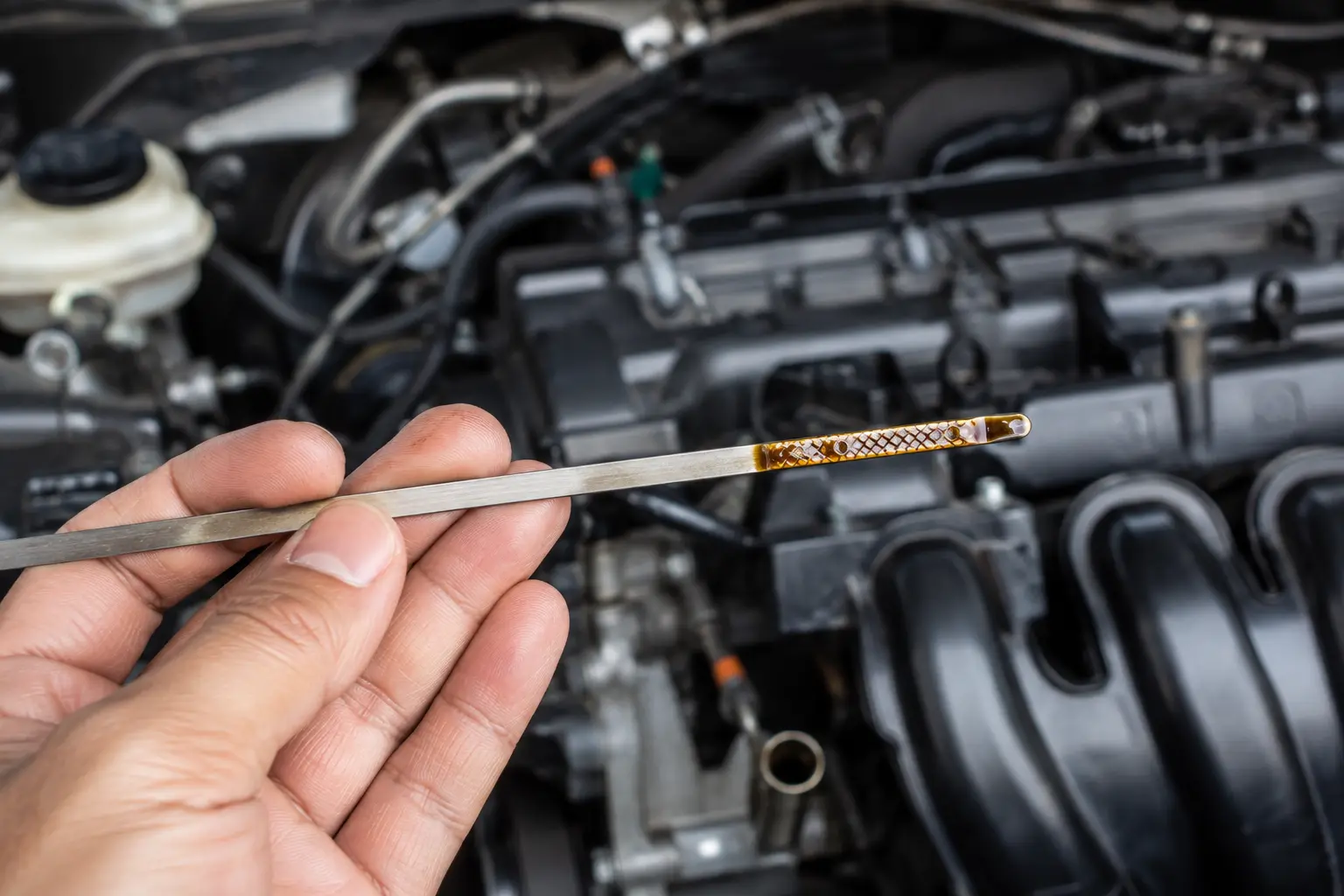
Both low and overfilled Engine Oil can trigger the Check Engine Light after an oil change.
Why It Happens
Too little oil may reduce lubrication and affect engine components, while too much oil can create foam and excessive crankcase pressure. Either condition may affect engine performance and trigger sensor readings outside the normal range.
Common Symptoms
- Check Engine Light
- Rough idle
- Engine noise
- Poor performance
- Oil leaks in severe cases
How to Fix It
Park on level ground and use the Dipstick to verify the oil level. If it’s below or above the manufacturer’s recommended range, correct the oil level immediately using the specification listed in the owner’s manual.
Is It Safe to Drive?
Avoid driving if the oil level is significantly low or overfilled. Correct the oil level before continuing.
3. Wrong Oil Viscosity
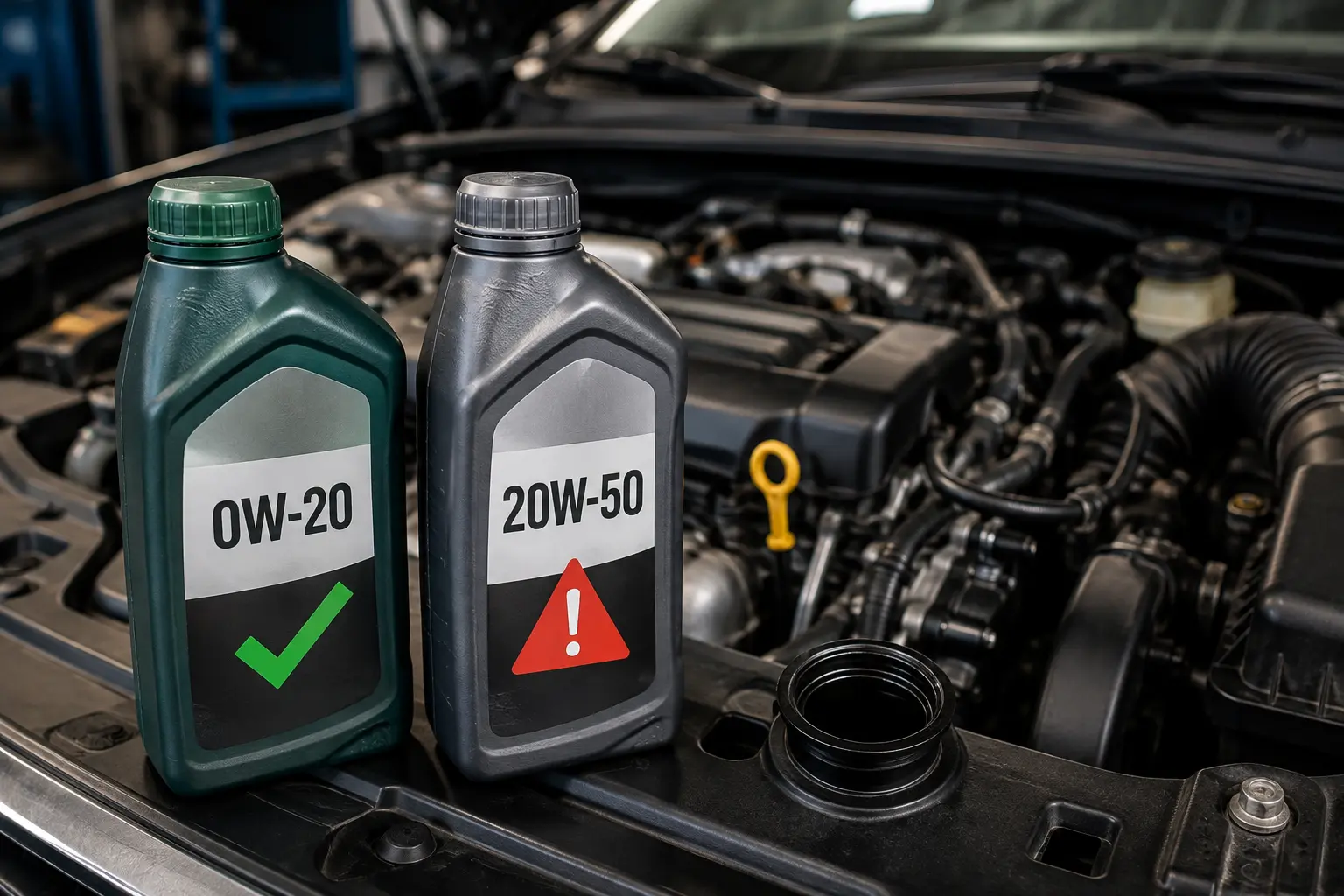
Using the wrong oil grade is another reason the check engine light comes on after oil change, especially in modern engines equipped with Variable Valve Timing (VVT).
Why It Happens
The VVT system relies on the correct oil pressure to adjust valve timing. Oil that’s too thick or too thin may prevent the system from operating correctly, causing the ECU to store codes such as P0011 or P0012.
Common Symptoms
- Check Engine Light
- Reduced acceleration
- Rough idle
- Lower fuel economy
- Delayed engine response
How to Fix It
Verify the oil viscosity against the specification in your owner’s manual. If the wrong oil was installed, replace it with the correct grade and install a new Oil Filter if necessary.
Is It Safe to Drive?
Short trips may be acceptable, but the incorrect oil should be replaced as soon as possible to avoid unnecessary engine wear.
4. Oil Filter Installed Incorrectly
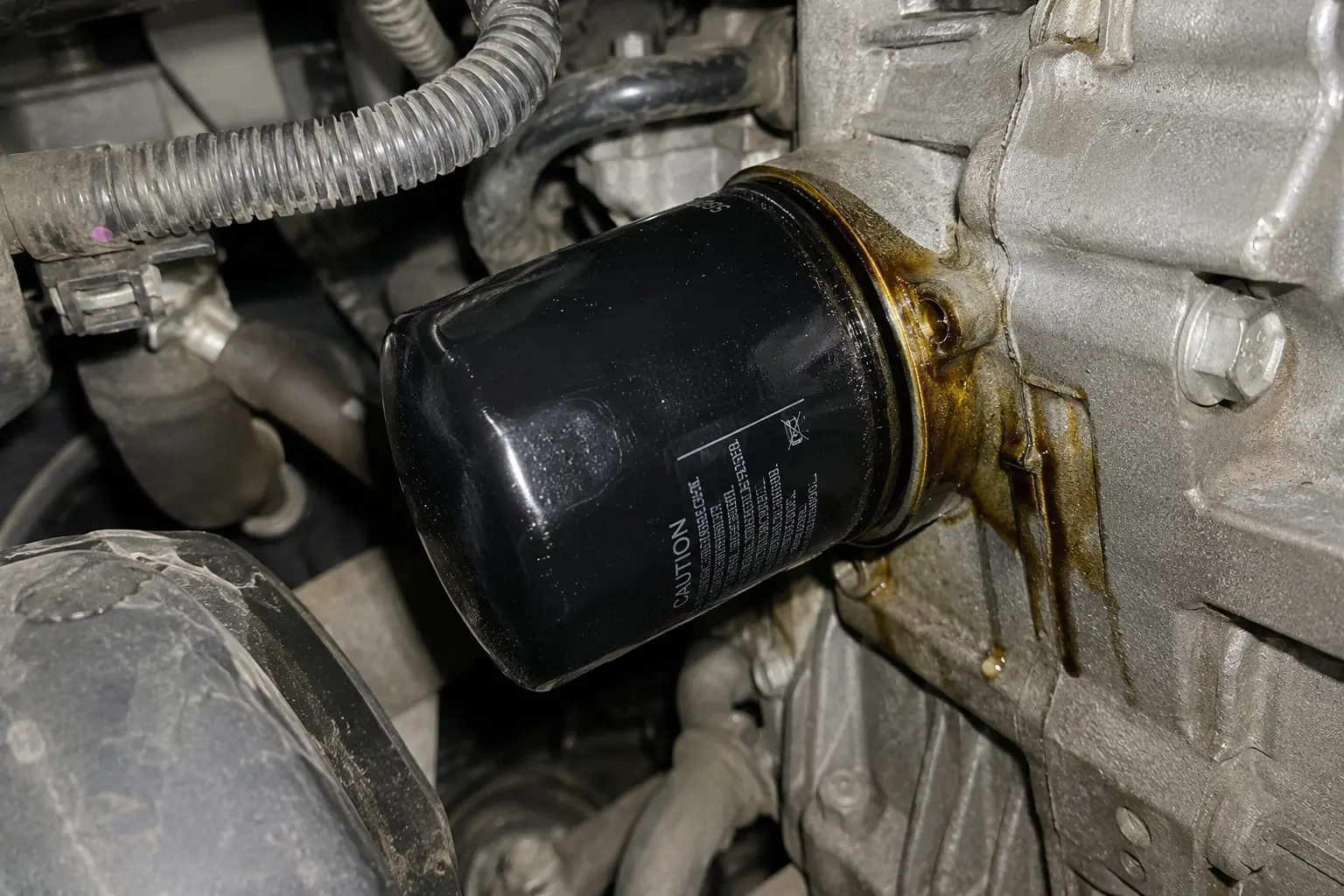
An improperly installed Oil Filter can also trigger a Check Engine Light after service.
Why It Happens
A loose filter, damaged gasket, or incorrect installation may affect oil pressure or cause leaks, allowing the ECU to detect abnormal engine operating conditions.
Common Symptoms
- Check Engine Light
- Oil leaks
- Burning oil smell
- Low oil pressure warning (in some cases)
How to Fix It
Inspect the Oil Filter and surrounding area for leaks. If the filter is loose, damaged, or installed incorrectly, replace it and verify the correct installation before restarting the engine.
Is It Safe to Drive?
No. If you notice oil leaking or the Oil Pressure Warning Light comes on, stop driving immediately to prevent engine damage.
5. Sensor or Electrical Connector Left Unplugged
During an oil change, technicians often work around the engine bay to inspect the air filter, top off fluids, or access nearby components. In some cases, an electrical connector may not be fully reconnected before the vehicle leaves the shop.
Why It Happens
A loose or partially disconnected Mass Air Flow (MAF) Sensor, Oxygen Sensor, or Camshaft Position Sensor can send incorrect data to the Engine Control Unit (ECU). An intermittent Check Engine Light can also occur when a loose connection causes sensor readings to move in and out of the expected range.
Common Symptoms
- Check Engine Light stays on
- Rough idle
- Hesitation during acceleration
- Reduced fuel economy
- Intermittent engine performance issues
How to Fix It
Open the hood and inspect the wiring around the air intake, valve cover, and nearby sensors. Make sure every electrical connector is fully seated and locked into place. If the warning remains, use an OBD-II Scanner to identify the stored Diagnostic Trouble Codes (DTCs) before replacing any parts.
Is It Safe to Drive?
Yes, if the engine is running normally. However, diagnose the problem promptly because inaccurate sensor readings can reduce performance and increase emissions.
6. Existing Engine Problem Detected After the Oil Change
Sometimes the Check Engine Light appears after an oil change even though the service wasn’t responsible.
Why It Happens
The timing can be coincidental. A weak Oxygen Sensor, failing ignition component, or another existing engine fault may finally exceed the threshold required for the ECU to illuminate the Malfunction Indicator Lamp (MIL).
Common Symptoms
- Check Engine Light
- Rough idle
- Poor acceleration
- Reduced fuel economy
- Engine hesitation
How to Fix It
Read the stored Diagnostic Trouble Codes (DTCs) with an OBD-II Scanner and diagnose the affected system. Avoid assuming the oil change caused the warning until the fault code confirms the actual problem.
Is It Safe to Drive?
If the light is solid and the vehicle drives normally, you can usually continue driving for a short period while arranging a diagnosis. If the light begins flashing, stop driving immediately.
What Should You Check First?
Before scheduling a repair, perform a quick visual inspection. These simple checks solve many cases where the check engine light is still on after oil change.
- Inspect the Oil Filler Cap and tighten it until it clicks.
- Verify the Engine Oil level using the Dipstick.
- Check around the Oil Filter and drain plug for leaks.
- Inspect the air intake and electrical connectors for anything left loose.
- Look underneath the vehicle for fresh oil leaks.
- Scan the ECU with an OBD-II Scanner to retrieve the stored Diagnostic Trouble Codes (DTCs).
If no obvious problem is found, avoid replacing parts without confirming the fault code first.
Can You Drive With a Check Engine Light After an Oil Change?
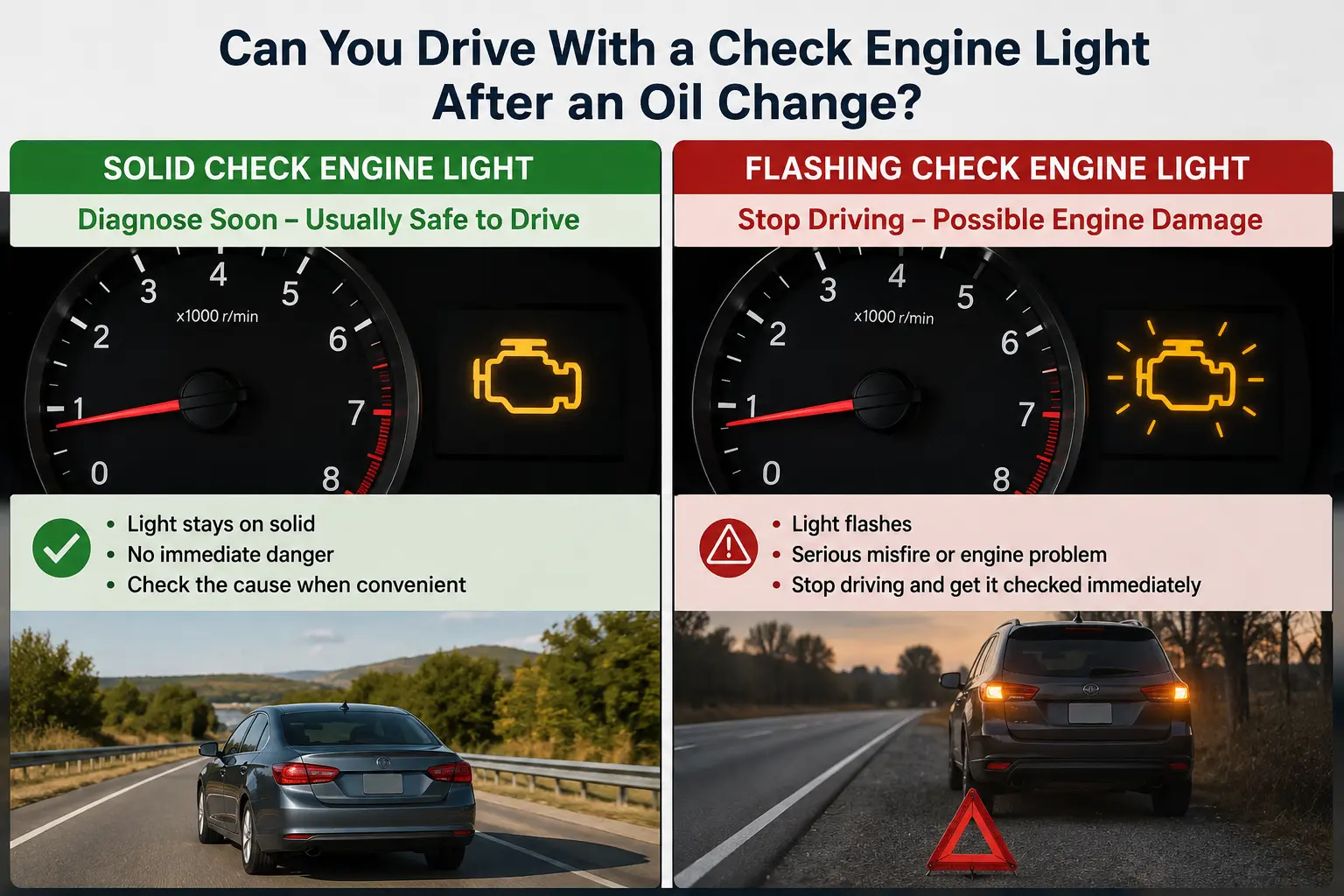
It depends on how the vehicle is behaving.
A solid Check Engine Light usually means the ECU has detected a fault that should be diagnosed soon, but the vehicle may still be safe to drive if there are no noticeable performance problems.
However, stop driving immediately if you notice:
- A flashing check engine light
- Engine shaking or severe vibration
- Knocking or ticking noises
- The Oil Pressure Warning Light is also illuminated
- Smoke or a burning oil smell
- Significant loss of power
These symptoms may indicate an active engine misfire or a lubrication problem that can quickly damage the Catalytic Converter or other engine components.
How to Fix a Check Engine Light After an Oil Change
After identifying the cause, the repair process is usually straightforward.
- Correct the underlying problem, such as tightening the Oil Filler Cap, adjusting the oil level, reconnecting a sensor, or replacing the incorrect Engine Oil.
- Use an OBD-II Scanner to verify and clear the stored Diagnostic Trouble Codes (DTCs) if necessary.
- Drive the vehicle normally so the ECU can complete its Drive Cycle and confirm the repair.
Once the underlying fault has been repaired, you can reset the Check Engine Light with an OBD-II scanner or allow the ECU to clear the warning after the required drive cycles.
Check Engine Light vs. Oil Pressure Warning Light
| Warning Light | What It Means | What You Should Do |
| Check Engine Light | Engine, emissions, or sensor-related fault detected by the ECU | Diagnose the stored Diagnostic Trouble Codes (DTCs) and repair the underlying issue. |
| Oil Pressure Warning Light | Low engine oil pressure that can quickly damage internal engine components | Stop the engine immediately and check the oil level before driving again. |
When Should You Return to the Shop?
If the check engine light coming on after oil change happened immediately after the service, contact the shop that performed the work.
Return as soon as possible if:
- The warning appeared shortly after the oil change.
- The engine leaks oil.
- The wrong oil grade was installed.
- A sensor or connector may have been disturbed during service.
- The vehicle runs poorly after leaving the shop.
A reputable repair facility should inspect the vehicle and correct any service-related issue.
Conclusion
A check engine light after oil change is usually caused by a simple service-related issue rather than a major engine failure. Start by inspecting the Oil Filler Cap, Engine Oil level, Oil Filter, and nearby sensor connections before assuming the worst.
If the warning remains, retrieve the Diagnostic Trouble Codes (DTCs) with an OBD-II Scanner and repair the root cause before clearing the light.
Understanding dashboard warning lights and responding to them correctly can help you avoid unnecessary repairs and keep your vehicle running safely.
Frequently Asked Questions
Why is my check engine light on after an oil change?
The most common causes are a loose Oil Filler Cap, incorrect oil level, wrong oil viscosity, or a disconnected sensor. An OBD-II Scanner can identify the stored Diagnostic Trouble Codes (DTCs) and confirm the exact cause.
How do I reset the check engine light after an oil change?
Repair the underlying problem first, then clear the stored codes with an OBD-II Scanner or allow the ECU to turn the light off automatically after completing the required Drive Cycle.
Can too much oil cause the check engine light to come on?
Yes. Overfilled Engine Oil can create excessive crankcase pressure and abnormal engine operation, causing the ECU to illuminate the warning.
Can the wrong engine oil trigger the check engine light?
Yes. Using the wrong oil viscosity can affect Variable Valve Timing (VVT) operation and trigger Diagnostic Trouble Codes (DTCs) related to valve timing or oil pressure.
My car is shaking and the check engine light came on after an oil change. What should I do?
If your car is shaking and the check engine light is on after oil change, stop driving immediately. This combination often indicates an active engine misfire that requires prompt diagnosis to prevent damage to the Catalytic Converter.