
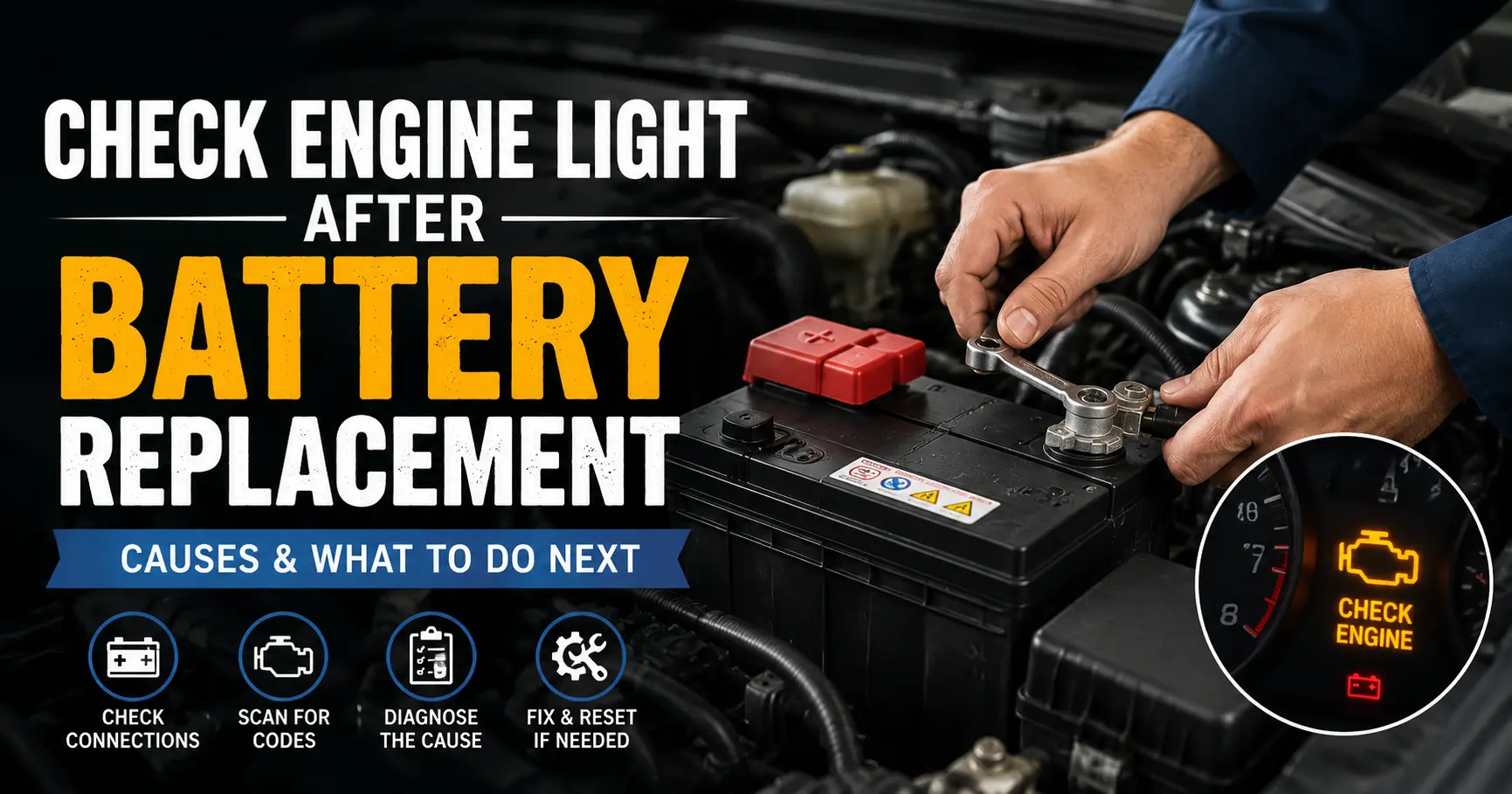
A check engine light after battery replacement does not always mean the new battery is bad. The warning can appear because the old battery caused low voltage, a battery terminal or ground is loose, the vehicle needs to relearn certain settings, or an unrelated engine fault is present.
Start by checking that both battery terminals are tight and the correct battery was installed. If the light stays on, scan the vehicle for Diagnostic Trouble Codes (DTCs) before clearing anything.
If the light is solid and the engine runs normally, short-term driving is usually reasonable. A flashing light, severe shaking, stalling, or major power loss needs more immediate attention.
Quick Answer: If your Check Engine Light came on after replacing the battery, inspect the battery connections first. Then use an OBD-II scanner to retrieve stored or pending codes. Don’t disconnect the battery again just to turn the light off because this can erase useful diagnostic information without fixing the cause.
Why Is My Check Engine Light On After Replacing the Battery?
Replacing a battery temporarily removes power from many vehicle systems. Depending on the vehicle, the Engine Control Module (ECM) or Powertrain Control Module (PCM) may lose some learned values when this happens.
However, battery disconnection itself should not be used as the explanation for every Check Engine Light.
The old battery may have caused a low-voltage fault before replacement. A terminal may not be fully tightened, or the new battery may not meet the vehicle’s specifications. It is also possible that an existing engine or emissions problem happened to trigger the warning around the same time.
Because there are many possible causes of a Check Engine Light, retrieving the fault code is more reliable than assuming the battery caused it.
5 Causes of a Check Engine Light After Battery Replacement
1. ECM/PCM Lost Learned Values
The ECM continuously makes adjustments based on how the engine operates. Depending on the vehicle, disconnecting the battery can reset some adaptive values.
After reconnecting power, you may notice a different idle or temporary changes in how the engine responds while the computer relearns.
What to do: Make sure the engine runs normally and follow any manufacturer-specific idle or throttle relearn procedure when required.
Safe to drive? Usually, if the CEL is solid and the engine runs normally. If the light remains on, scan for codes rather than assuming relearning will fix it.
2. Low Voltage From the Old Battery
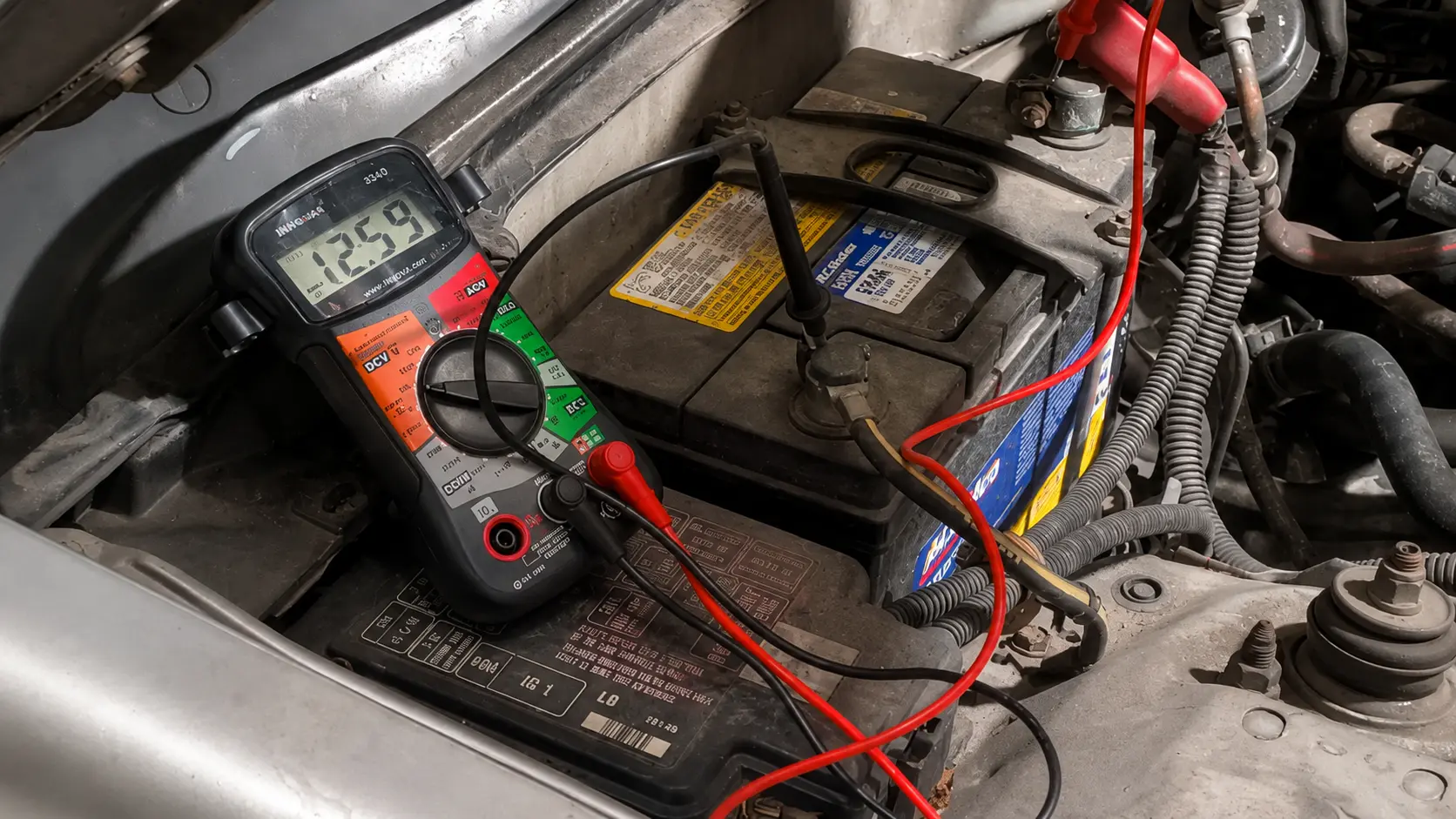
The problem may have started before the new battery was installed.
A weak or discharged battery can cause system voltage to fall low enough for electronic modules to record faults. One example is P0562 (System Voltage Low).
You may also have seen other warning lights or experienced slow starting before replacing the battery.
What to do: Scan for stored and pending DTCs. If a voltage-related fault returns with the new battery installed, the charging system, alternator, cables, and grounds may need testing.
Do not replace a component based only on a code description. The code identifies the condition the computer detected; proper testing determines the cause.
3. Loose Battery Terminal or Poor Ground
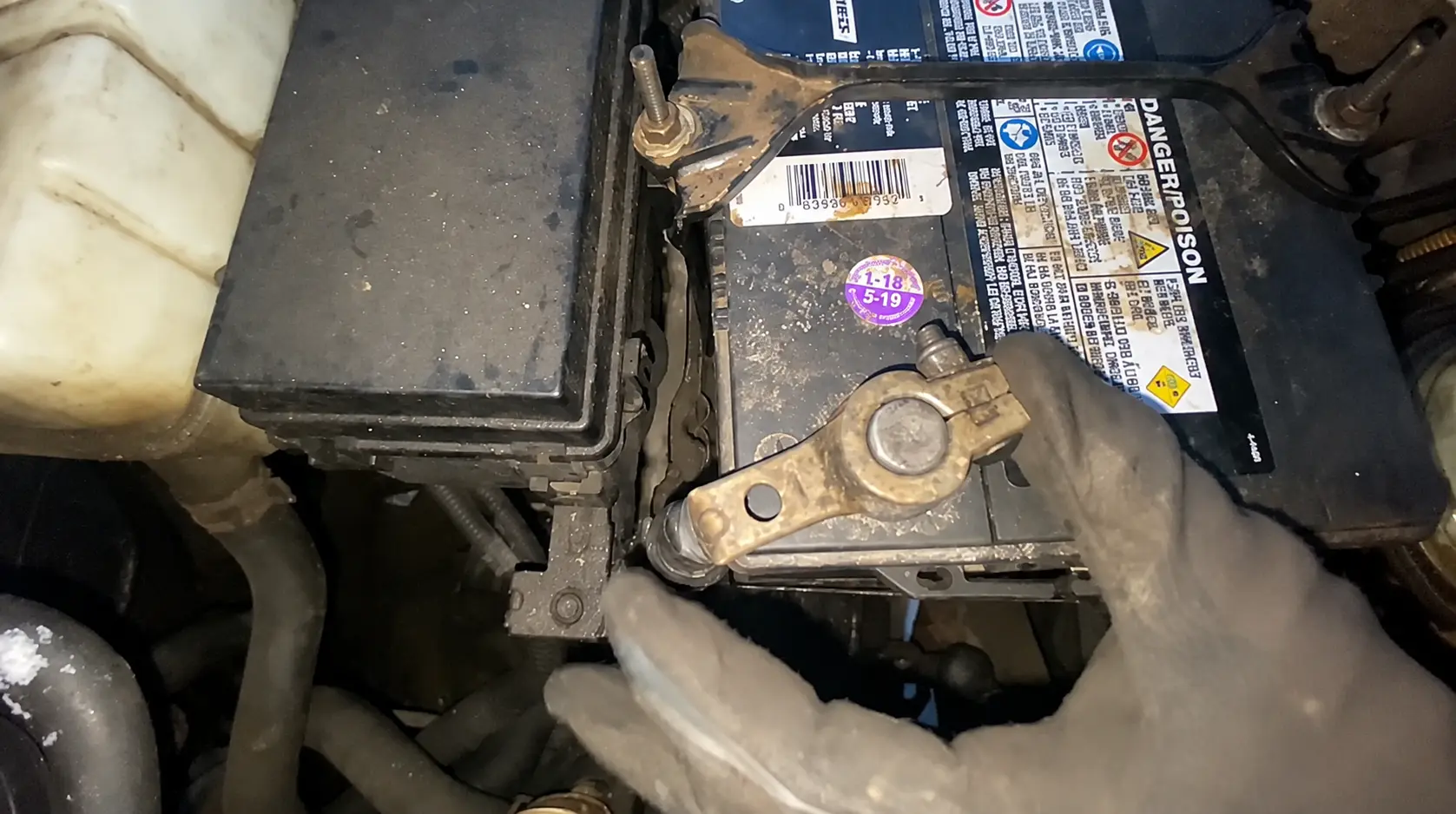
If the check engine light came on after battery replacement, inspect the installation before looking for complicated engine problems.
A battery terminal that is not fully seated or tightened can cause an unstable electrical connection. Corrosion, a damaged cable, or a poor chassis/engine ground can cause similar problems.
Possible symptoms include:
- Hard starting
- Flickering electrical equipment
- Multiple warning lights
- Intermittent loss of electrical power
What to do: With the vehicle switched off, visually check that the battery connections are correctly installed and secure. If there is corrosion, damaged wiring, or a questionable ground connection, have it corrected.
Safe to drive? A loose connection should be fixed before normal driving because electrical power could become unreliable.
4. Incorrect Battery or Battery Management Issue
Some newer vehicles use AGM batteries, start-stop systems, intelligent charging, or a Battery Management System (BMS).
Installing a battery with the wrong specification can cause charging or electrical-system problems. Some vehicles also require a battery registration or BMS reset procedure after replacement.
This requirement is vehicle-specific, so don’t assume every car needs battery registration.
What to do: Confirm that the replacement battery matches the manufacturer’s required type, size, capacity, and other relevant specifications. Check the manufacturer’s service procedure to determine whether registration or a BMS reset is required.
Safe to drive? If the vehicle starts and runs normally, it may be possible to drive it briefly, but an incorrect battery or charging-system problem should be corrected.
5. An Existing Engine or Emissions Fault
Sometimes the timing is coincidental.
A misfire, EVAP leak, air-fuel problem, or sensor circuit fault can illuminate the CEL shortly after battery replacement even though the new battery did not cause it.
This is why an OBD-II scan matters.
If you find a misfire code such as P0301, for example, don’t assume changing the battery created a cylinder misfire. Diagnose the ignition, fuel, wiring, and mechanical possibilities that relate to that code.
What to Do After Replacing the Battery
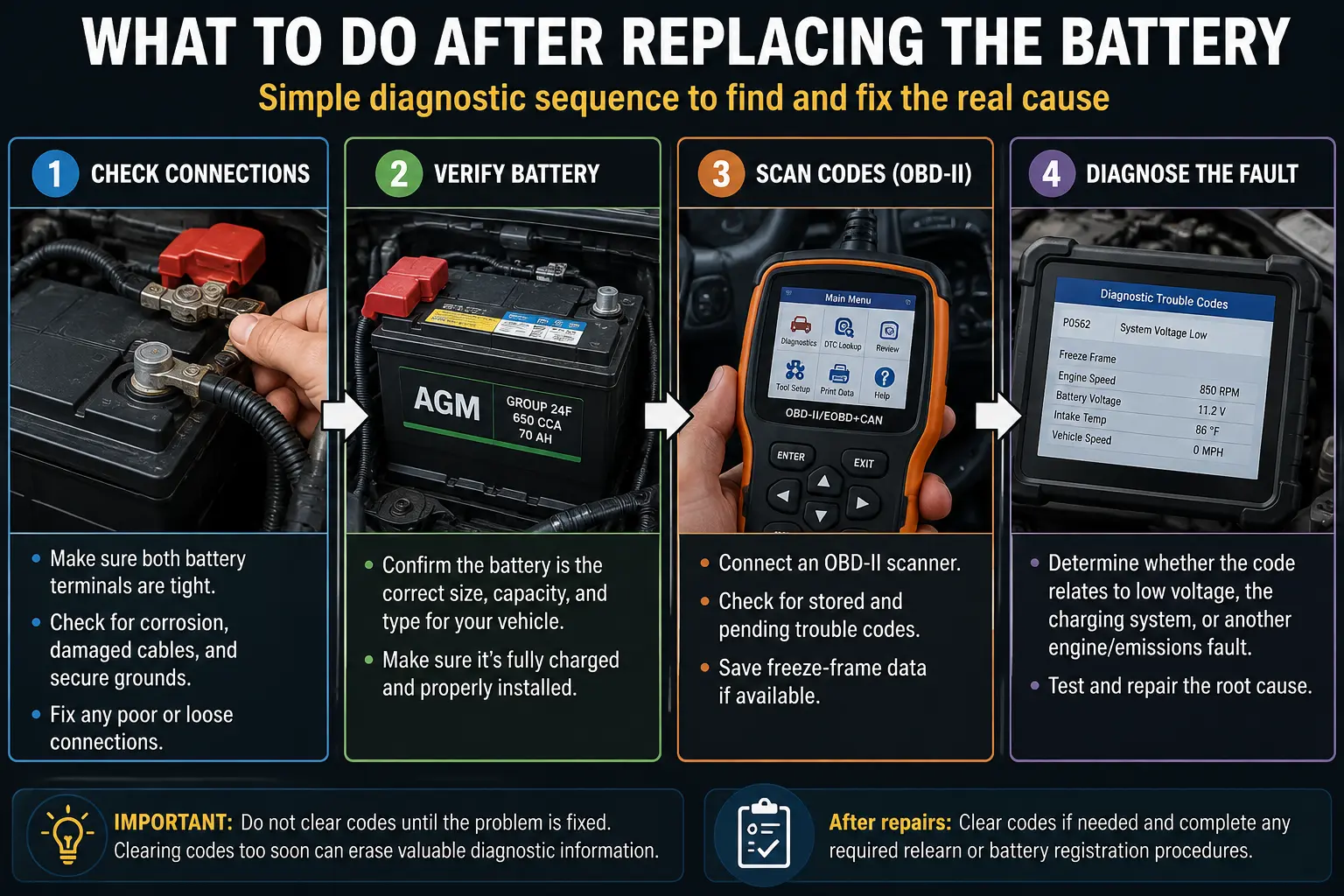
If your check engine light is on after replacing the battery, use this order:
- Check the battery installation. Confirm the terminals are secure and there is no obvious cable or ground damage.
- Verify the battery specification. Make sure the correct battery type was installed.
- Watch how the engine runs. Note rough idle, stalling, hesitation, or reduced power.
- Scan for DTCs. Check stored and pending codes and save available freeze-frame data.
- Do not immediately erase the codes. They may contain the clue needed to diagnose the problem.
- Diagnose the affected system. Determine whether the code relates to low voltage, the charging system, or a separate engine/emissions fault.
- Check vehicle-specific procedures. Some models require an idle relearn, battery registration, or BMS reset.
Once the underlying problem has been corrected, resetting the Check Engine Light may be appropriate if it does not clear through normal system monitoring.
Will the Check Engine Light Reset Itself After Battery Replacement?
It can, depending on why the warning appeared.
If the condition that triggered the warning no longer exists, the ECM may turn the light off after the required system checks are completed. There is no single mileage or number of trips that applies to every vehicle and every fault.
If you have an intermittent Check Engine Light that disappears and later returns, scan for stored or pending codes instead of repeatedly clearing it.
Is It Safe to Drive?
A solid Check Engine Light with normal engine operation usually allows cautious short-term driving while you arrange diagnosis.
Get the vehicle checked sooner if it runs rough, stalls, develops charging problems, or several warning lights remain illuminated.
If the Check Engine Light starts flashing and the engine shakes or loses significant power, stop driving when it is safe. A flashing CEL can indicate an active misfire that may damage the catalytic converter.
The Bottom Line
A check engine light after replacing a battery is not automatically a sign that the new battery has failed. Start with the battery terminals and correct battery specification, then retrieve the stored DTCs.
If the CEL is solid and the vehicle runs normally, the problem is usually less urgent. If it flashes, the engine runs badly, or electrical power becomes unstable, stop driving when safe and have the fault diagnosed promptly.
FAQs
Why did my Check Engine Light come on right after installing a new battery?
Possible reasons include low-voltage faults from the old battery, loose battery connections, lost adaptive values, an incorrect battery specification, or an unrelated engine fault. Scan the vehicle if the warning remains on.
Does a new battery need time to reset the computer?
The ECM may need to relearn certain adaptive values after power is restored, depending on the vehicle. However, a persistent CEL should not simply be assumed to be part of the relearn process.
What about a Check Engine Light after battery replacement on a Jeep Cherokee or Ram 1500?
The same basic diagnostic steps apply to vehicles such as the 2016 Jeep Cherokee and 2019–2021 Ram 1500: verify the battery and connections, scan the DTCs, and check the vehicle-specific battery management or relearn requirements. Do not clear the warning until you know why it appeared.