
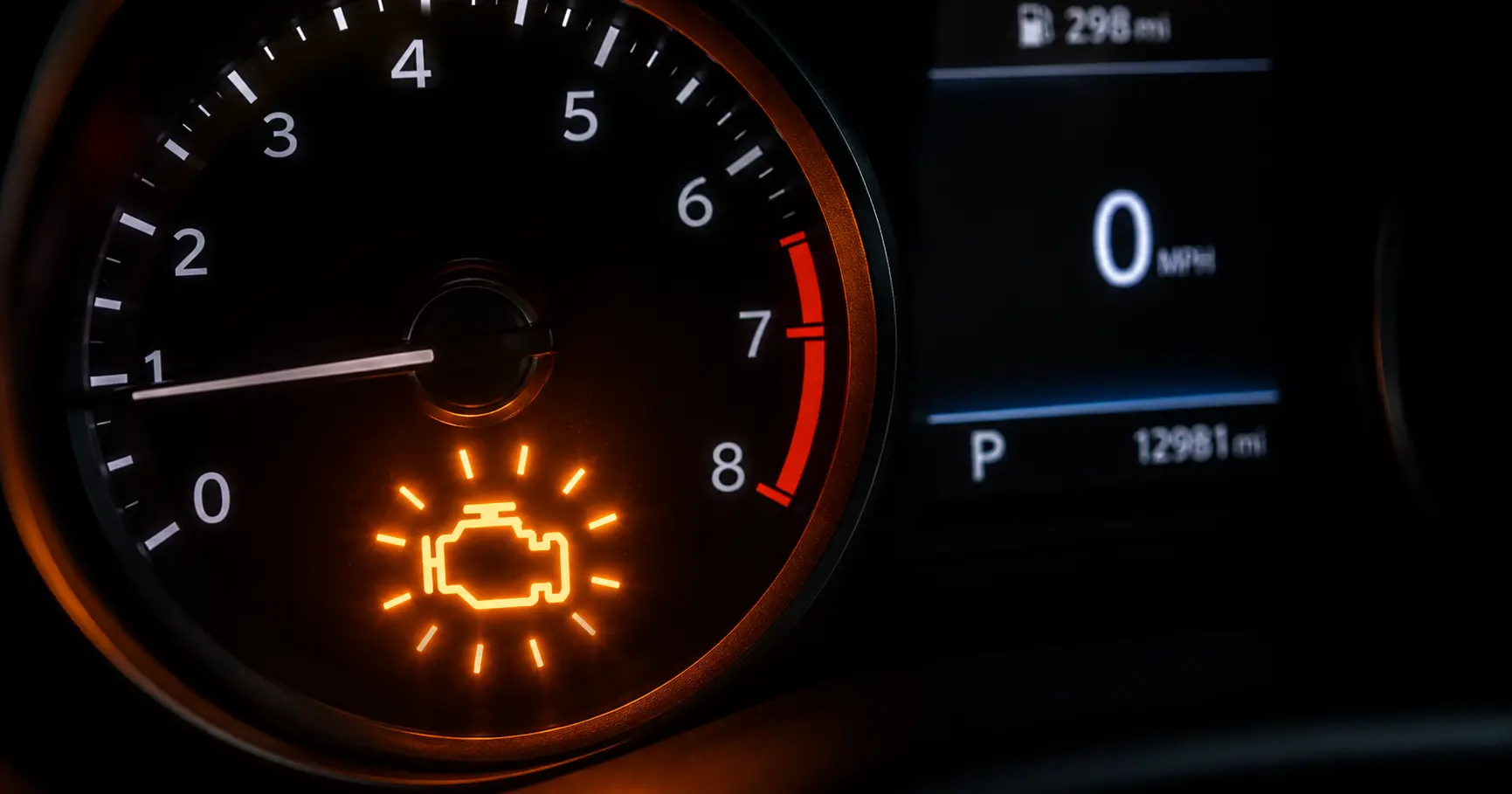
A flashing check engine light is one of the most serious dashboard warnings you can experience. Unlike a solid check engine light, a flashing light usually means your engine is actively misfiring, allowing unburned fuel to enter the exhaust system.
If ignored, this can quickly overheat and damage the catalytic converter, leading to expensive repairs. If your check engine light is flashing while driving, don’t ignore it or assume it will disappear on its own.
In many cases, slowing down, avoiding hard acceleration, and stopping the vehicle safely can help prevent further engine damage.
In this article, you’ll learn what a flashing or blinking check engine light means, the most common causes, whether it’s safe to continue driving, and the first steps you should take before minor issues become major repairs.
Quick Answer
A flashing check engine light usually indicates an active engine misfire that requires immediate attention. Unlike a solid check engine light, a flashing warning means unburned fuel may be entering the catalytic converter, creating excessive heat that can damage both the converter and the engine. Reduce your speed, avoid hard acceleration, and stop driving as soon as it is safe. If the light continues flashing, have the vehicle diagnosed with an OBD-II scanner immediately.
What Does a Flashing or Blinking Check Engine Light Mean?
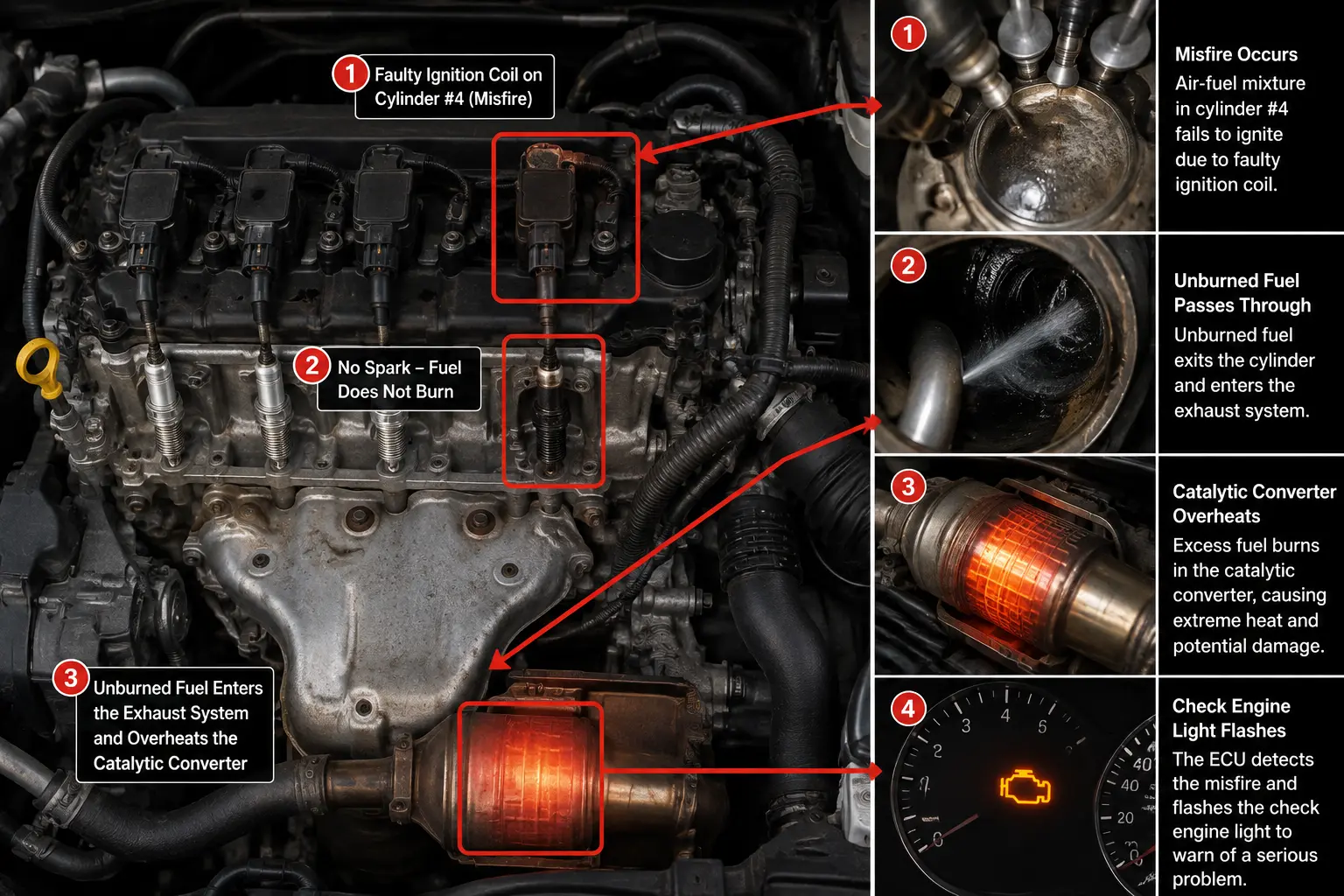
Many drivers search “what does a blinking check engine light mean?” or “what does a check engine light blinking mean?” The answer is straightforward: flashing and blinking are different words for the same warning.
A flashing check engine light means your vehicle’s Engine Control Unit (ECU) or Powertrain Control Module (PCM) has detected a serious fault that needs immediate attention. In most cases, this fault is an active engine misfire, where one or more cylinders fail to burn the air-fuel mixture correctly.
When a cylinder misfires, unburned fuel leaves the combustion chamber and enters the exhaust system. The catalytic converter is designed to reduce harmful emissions—not burn raw fuel. Excess fuel can quickly raise its temperature beyond normal operating limits, causing internal damage that may require a costly replacement.
Besides damaging the catalytic converter, a severe misfire can lead to:
- Reduced engine power
- Rough idling
- Poor acceleration
- Increased fuel consumption
- Higher exhaust emissions
If you’re wondering “why is my check engine light blinking?”, don’t ignore the warning. A flashing light is your vehicle’s way of telling you the problem is serious enough that continued driving could make it worse.
Is It Safe to Drive With a Flashing Check Engine Light?
No. In most situations, you should not continue driving if your check engine light is flashing.
Unlike a solid warning light that often indicates a non-urgent fault, a flashing light signals an active problem that can rapidly damage expensive engine and exhaust components.
If the vehicle is still running, reduce your speed immediately and avoid heavy acceleration. If you notice severe vibration, loss of power, or unusual engine noises, pull over safely and switch the engine off.
Flashing vs. Solid Check Engine Light
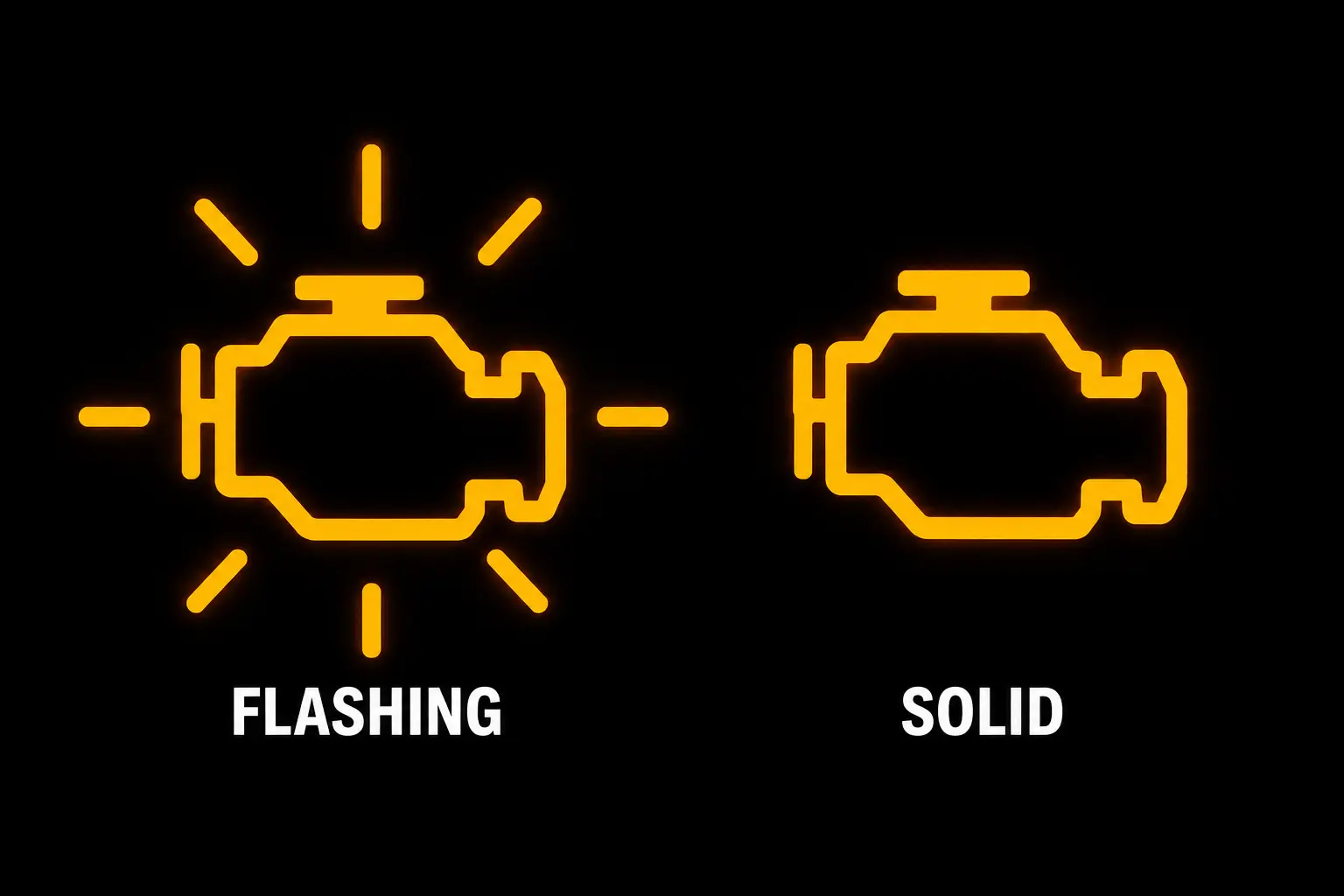
| Flashing Check Engine Light | Solid Check Engine Light |
| Usually indicates an active engine misfire | May indicate a less urgent engine or emissions fault |
| Requires immediate attention | Schedule diagnosis soon |
| High risk of catalytic converter damage | Lower immediate risk of major damage |
| Avoid driving except to reach a safe location | Short-distance driving may be possible depending on symptoms |
Driving with a flashing check engine light may lead to:
- Catalytic converter failure
- Engine overheating
- Reduced fuel economy
- Permanent engine damage
- Expensive repairs
Even if the vehicle seems to drive normally, the warning should never be ignored.
Most Common Causes of a Flashing Check Engine Light
If you’re wondering “Why is my check engine light blinking?”, the warning is usually triggered by a problem affecting the engine’s combustion process. Below are the most common causes.
1. Engine Misfire
When one or more cylinders fail to burn the air-fuel mixture properly, unburned fuel enters the exhaust system and can quickly overheat the catalytic converter. Common symptoms include rough idling, engine shaking, poor acceleration, loss of power, and a flashing check engine light.
2. Faulty Ignition Coil
A weak or failed ignition coil cannot generate enough voltage for the spark plugs, causing one or more cylinders to misfire. This often leads to rough running, hesitation, poor fuel economy, and may trigger misfire codes such as P0301, P0302, P0303, or P0304.
3. Worn or Fouled Spark Plugs
As spark plugs wear out or become carbon-fouled, they struggle to ignite the air-fuel mixture efficiently. This can result in difficult starting, engine vibration, sluggish acceleration, and a flashing check engine light.
4. Fuel Injector Problems
A clogged or malfunctioning fuel injector can deliver too much or too little fuel into the cylinder, upsetting the air-fuel mixture and causing engine misfires. Drivers may notice rough idling, poor throttle response, and reduced engine performance.
5. Vacuum Leak
Extra air entering the engine through a leaking vacuum hose or intake gasket creates a lean air-fuel mixture. This can cause rough idling, poor acceleration, and intermittent engine misfires that trigger the warning light.
6. Catalytic Converter Overheating
Continuous engine misfires allow raw fuel to reach the catalytic converter, causing excessive heat that can melt its internal components. If ignored, this may lead to severe exhaust restrictions and expensive repairs.
Tip: If your check engine light is flashing, have the vehicle diagnosed as soon as possible to prevent further engine and catalytic converter damage.
Car Shakes and Check Engine Light Blinks
If your car shakes and the check engine light blinks, treat it as an urgent warning. This combination almost always indicates a severe engine misfire.
When one or more cylinders stop firing properly, the engine becomes unbalanced, causing noticeable vibration, rough idling, and loss of power. At the same time, unburned fuel enters the exhaust system, increasing the risk of overheating the catalytic converter.
Common causes include:
- Failed ignition coil
- Worn or damaged spark plugs
- Faulty fuel injector
- Low fuel pressure
- Vacuum leak
- Engine compression problems
If your check engine light is blinking and the car is shaking, reduce your speed immediately, avoid hard acceleration, and pull over safely. Continuing to drive may lead to expensive engine or catalytic converter damage.
Check Engine Light Blinking Then Stops
Many drivers notice the check engine light blinking then stops after a few seconds and assume the problem has gone away. Unfortunately, that’s not always the case.
A flashing light that stops usually means the engine experienced an intermittent misfire. While the misfire may not be occurring constantly, the fault is often stored in the Engine Control Unit (ECU) as a Diagnostic Trouble Code (DTC).
Possible causes include:
- Loose ignition coil connector
- Worn spark plug
- Moisture in the ignition system
- Intermittent fuel injector fault
- Temporary vacuum leak
Even if the warning light stops flashing, you should scan the vehicle with an OBD-II scanner. Ignoring an intermittent fault can allow it to worsen over time and eventually cause a continuous flashing warning.
What Should You Do If the Check Engine Light Starts Flashing?
A flashing check engine light should never be ignored. Taking the right steps immediately can help prevent serious engine damage.
- Reduce your speed and avoid heavy acceleration.
- Pull over safely as soon as possible.
- Turn off the engine if the vehicle is running poorly or shaking.
- Check for obvious issues, such as a loose gas cap or visible wiring damage.
- Scan the vehicle with an OBD-II scanner to identify Diagnostic Trouble Codes (DTCs).
- Arrange professional repairs if the light continues flashing or the engine runs rough.
Do not continue driving simply because the vehicle still moves normally. A flashing warning often indicates damage is already occurring inside the engine or exhaust system.
How Mechanics Diagnose a Flashing Check Engine Light
Professional technicians don’t replace parts based on guesswork. Instead, they follow a systematic diagnostic process to identify the root cause.
A typical diagnosis includes:
- Reading Diagnostic Trouble Codes (DTCs) with an OBD-II scanner
- Reviewing Freeze Frame Data to determine when the fault occurred
- Monitoring Live Data, including fuel trim and sensor readings
- Inspecting spark plugs and ignition coils
- Testing fuel injectors and fuel pressure
- Performing a compression test if an internal engine problem is suspected
Common misfire-related trouble codes include:
| DTC Code | Meaning |
| P0300 | Random or multiple cylinder misfire |
| P0301 | Cylinder 1 misfire |
| P0302 | Cylinder 2 misfire |
| P0303 | Cylinder 3 misfire |
| P0304 | Cylinder 4 misfire |
Accurate diagnosis prevents unnecessary parts replacement and ensures the correct repair is performed the first time.
Average Repair Costs
Repair costs depend on the underlying cause of the flashing check engine light.
| Repair | Average Cost (USD) |
| Spark Plug Replacement | $100–$300 |
| Ignition Coil Replacement | $150–$400 |
| Fuel Injector Replacement | $250–$800 |
| Oxygen Sensor Replacement | $150–$500 |
| Catalytic Converter Replacement | $900–$2,500+ |
Repairing the problem early is usually far less expensive than replacing a damaged catalytic converter or repairing severe engine damage.
Conclusion
A check engine light flashing is one of the most urgent dashboard warnings your vehicle can display. In most cases, it indicates an active engine misfire that can quickly damage the catalytic converter and reduce engine performance if ignored.
If you notice a blinking check engine light, especially if the engine is shaking, losing power, or running roughly, reduce your speed and pull over safely as soon as possible. Early diagnosis with an OBD-II scanner and timely repairs can prevent more expensive damage and keep your vehicle running safely.
Frequently Asked Questions
Can a flashing check engine light fix itself?
Sometimes the light may stop flashing if the misfire becomes intermittent, but the underlying fault usually remains stored in the ECU. The vehicle should still be diagnosed.
Does a flashing check engine light always mean an engine misfire?
In most cases, yes. While other serious engine or emissions faults can trigger a flashing warning, an active engine misfire is the most common cause.
Can bad gas cause a flashing check engine light?
Yes. Contaminated or low-quality fuel can cause poor combustion, resulting in engine misfires and a flashing check engine light.
Can low engine oil cause a flashing check engine light?
If your vehicle displays a red oil warning instead of a flashing engine light, it’s important to understand what the oil pressure warning light indicates before continuing to drive.
Why is my check engine light flashing but the car still runs?
The engine may still operate if only one cylinder is misfiring, but continued driving can damage the catalytic converter. The problem should be diagnosed as soon as possible.
How much does it cost to fix a flashing check engine light?
The cost varies depending on the cause. Minor repairs such as replacing spark plugs may cost a few hundred dollars, while replacing a catalytic converter or repairing major engine damage can cost several thousand dollars.