
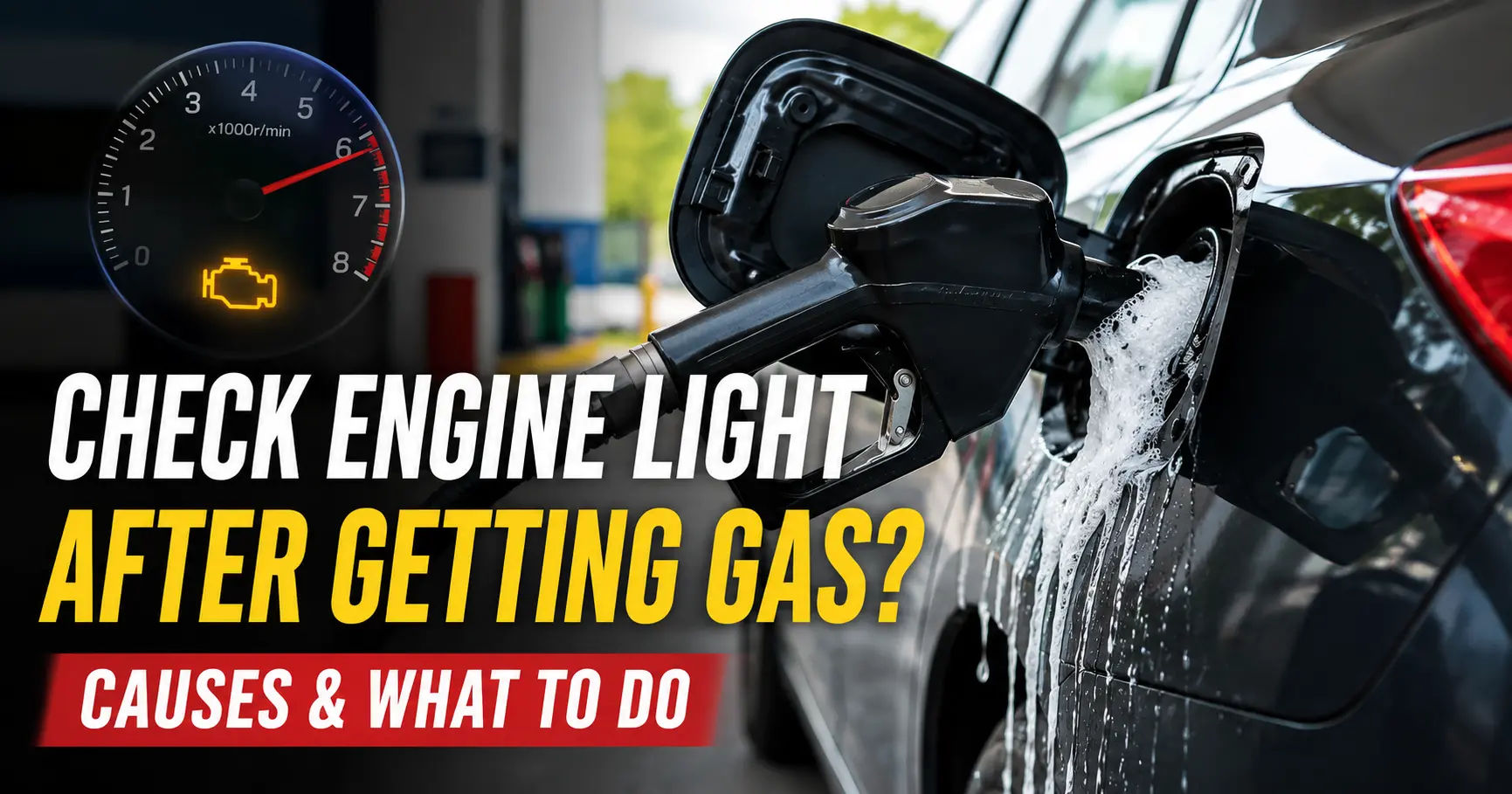
If your check engine light came on after getting gas, check the fuel cap first. A loose, damaged, or poorly sealed cap can trigger an EVAP system fault. Other possible causes include an EVAP leak, faulty purge valve, vent valve problem, or capless fuel-filler issue.
If the light is solid and the car runs normally, you usually don’t need to stop immediately. If it is flashing or the engine is shaking or losing power, treat the problem as urgent.
Quick Answer: Check that the gas cap is installed correctly and its seal isn’t damaged. If the light stays on, scan for OBD-II trouble codes before replacing anything.
Why Does the Check Engine Light Come On After Getting Gas?
Your vehicle’s evaporative emission control (EVAP) system keeps gasoline vapors from escaping.
The system can include the fuel tank, gas cap or capless filler, EVAP hoses, charcoal canister, purge valve, vent valve, and fuel tank pressure sensor.
If the PCM/ECM detects a leak or another EVAP fault, it can store a diagnostic trouble code (DTC) and turn on the check engine light.
However, if the check engine light came on immediately after getting gas, don’t automatically blame the fuel. Another fault may have appeared at the same time.
Common Causes After Refueling
1. Loose or Damaged Gas Cap
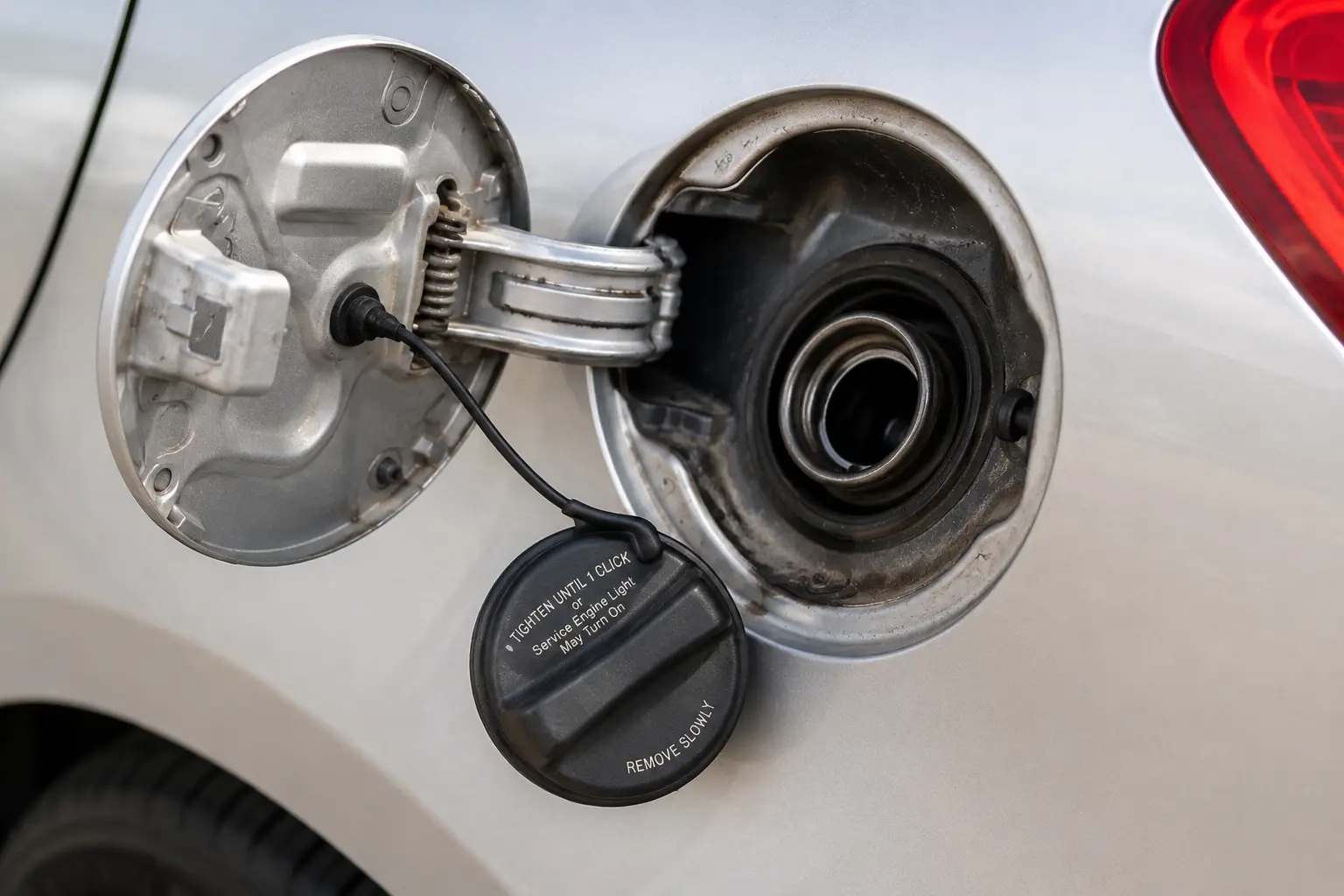
This is the first thing to check on vehicles with a traditional fuel cap.
If the cap isn’t installed correctly or its seal is cracked or damaged, fuel vapor can escape and the EVAP system may detect a leak.
You may have no symptoms other than a solid CEL.
What to do: Remove the cap, inspect the seal and sealing surface, then reinstall it correctly. Replace it only if inspection or diagnosis shows it is faulty.
If the light remains solid and the engine runs normally, you can usually drive while arranging diagnosis. A check engine light can have many causes, however, so don’t ignore it if it stays on.
2. Faulty EVAP Purge Valve
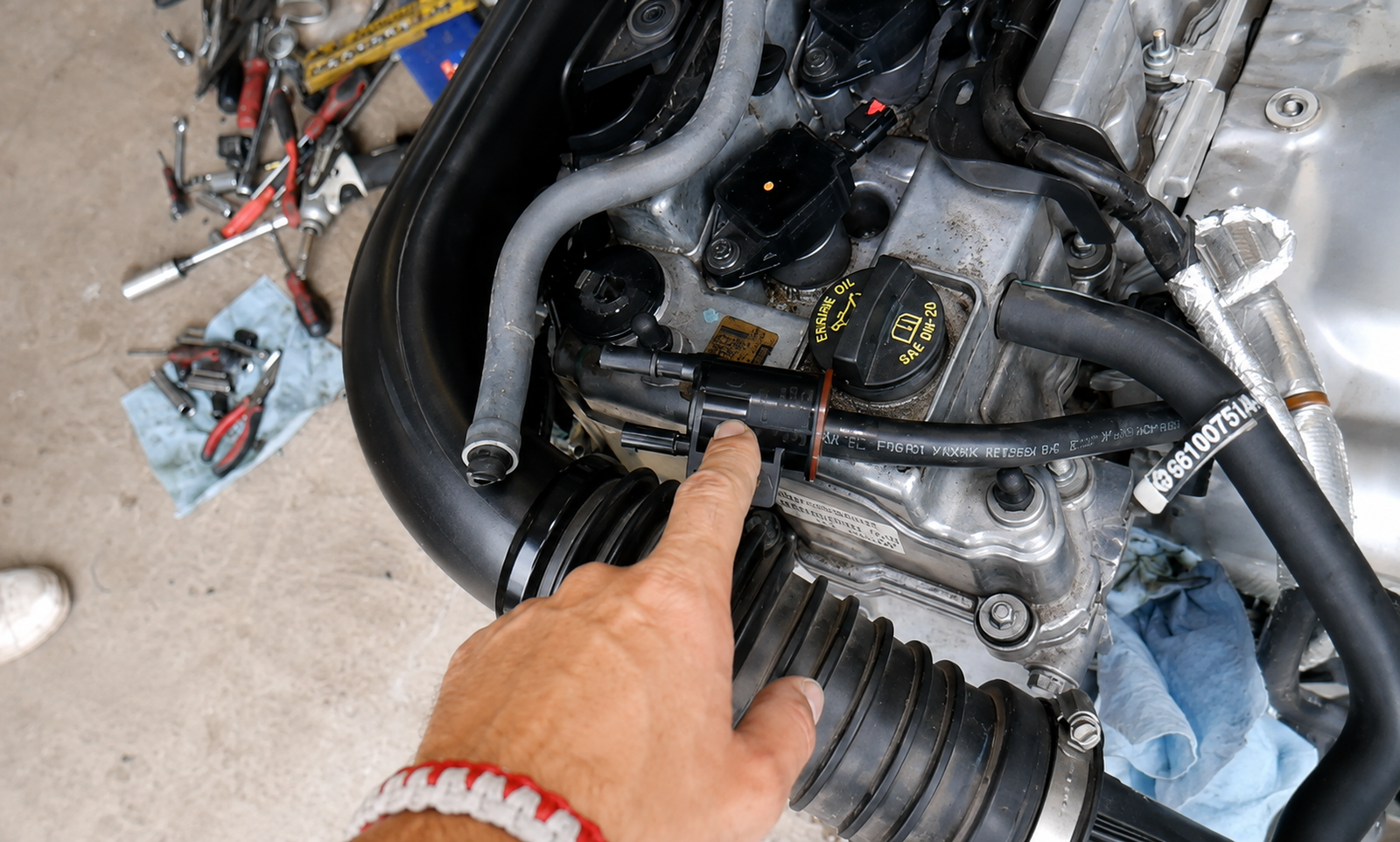
The purge valve controls when stored fuel vapors enter the engine.
A valve that sticks open can allow too much vapor into the intake, especially after filling the tank. A useful clue is hard starting or rough running after refueling.
What to do: Scan for codes and test the purge system rather than replacing the valve based only on symptoms.
If the vehicle runs very poorly or repeatedly stalls, have it diagnosed before continuing normal driving.
3. EVAP Leak or Vent-System Problem
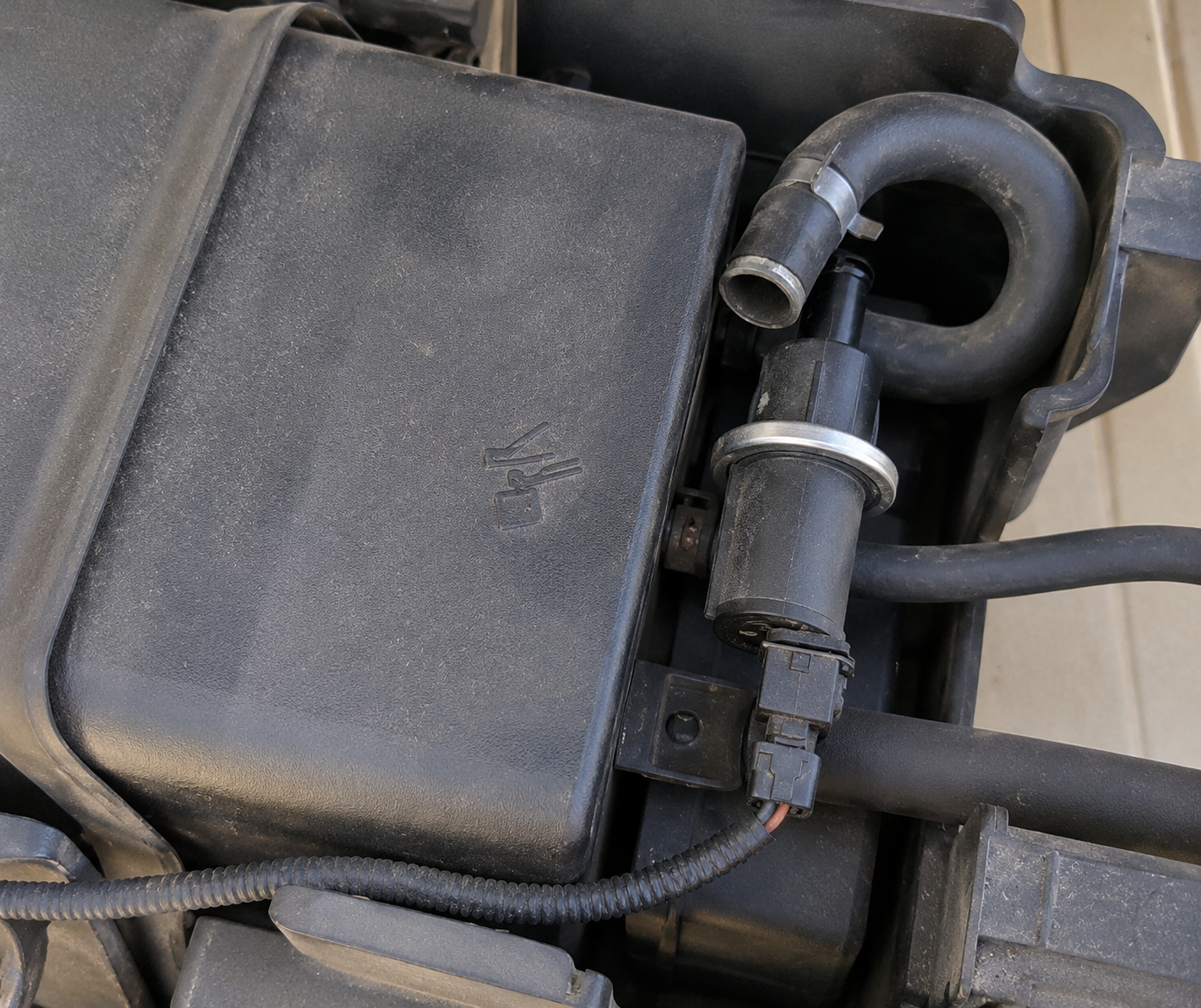
The leak may be elsewhere in the EVAP system.
Possible sources include:
- Damaged EVAP hoses
- Leaking connections
- Faulty vent valve
- Charcoal canister problems
- Filler-neck sealing issues
A technician may use an EVAP smoke test and scan-tool data to locate a leak.
A DTC tells you where to begin diagnosis; it does not automatically identify the part that needs replacement.
4. Overfilling the Fuel Tank
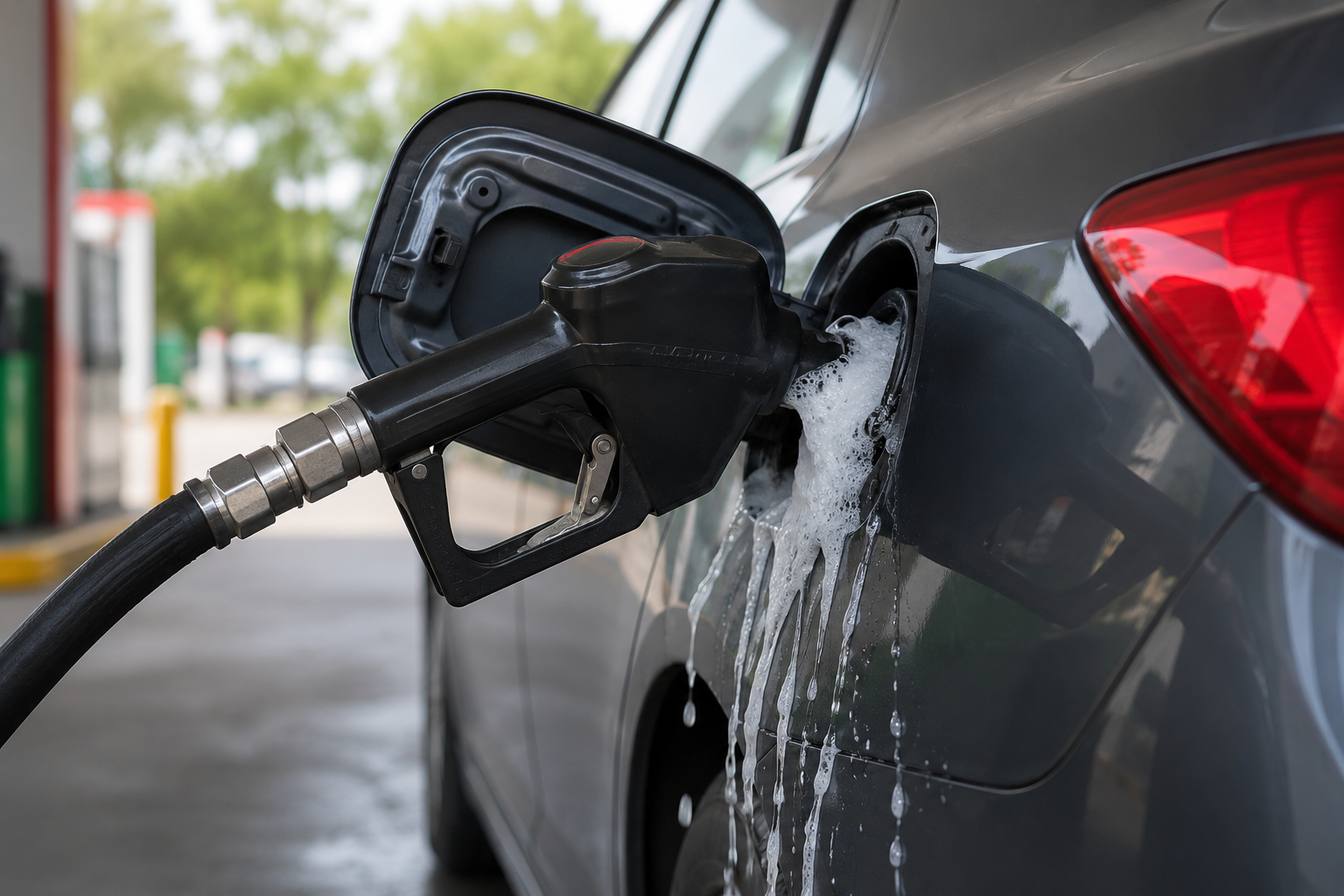
Avoid adding more fuel after the pump nozzle automatically shuts off.
Repeatedly topping off can interfere with the vapor-management system and may contribute to charcoal-canister or EVAP problems on some vehicles.
The simplest prevention is to stop fueling at the first automatic shutoff.
Check Engine Light After Getting Gas With No Gas Cap
Some vehicles use a capless fuel filler system.
If you have a check engine light after getting gas with no gas cap, inspect the filler opening for obvious dirt or debris that could interfere with its sealing mechanism.
Don’t force anything into the filler. If it appears normal and the CEL remains on, another EVAP component may need diagnosis.
What Should You Do Next?
Start with these steps:
- Check whether the warning is solid or flashing.
- Inspect and correctly reinstall the gas cap, if equipped.
- Don’t top off the fuel tank.
- Watch for hard starting, rough idle, hesitation, or fuel odors.
- If the CEL stays on, perform an OBD-II scan.
Common EVAP codes include P0442 for a small detected leak, P0455 for a large/gross detected leak, and P0456 for a very small detected leak.
Don’t replace a gas cap, purge valve, or another component simply because a code appears. Proper diagnosis may require checking hoses, valves, seals, and EVAP-system operation.
Also avoid resetting the check engine light before diagnosis because clearing codes can remove useful diagnostic information.
Why Does the Check Engine Light Go Off After Getting Gas?
If the check engine light goes off after getting gas or after you correct a loose cap, the PCM may have rerun its monitor without detecting the fault again.
It may not turn off immediately after tightening the cap because monitor conditions vary by vehicle.
If the check engine light comes on and off repeatedly after refueling, scan for stored or pending codes rather than assuming the problem has disappeared.
What If the Check Engine Light Is Flashing After Getting Gas?
A check engine light flashing after getting gas should not be treated like a typical loose-cap warning.
A flashing check engine light commonly indicates an active misfire that may damage the catalytic converter.
Reduce engine load. If the vehicle shakes, jerks, loses significant power, or keeps flashing the CEL, pull over safely and stop the engine.
Bottom Line
When the check engine light is on after getting gas, start with the fuel cap or capless filler. If those look normal, an EVAP leak, purge valve, vent valve, or another emissions-system fault may be responsible.
If the warning remains on, scan for OBD-II codes and diagnose the fault before replacing parts.
FAQs
Can bad gas cause a check engine light after filling up?
It can contribute to drivability problems in some cases, but don’t assume the fuel is bad based only on timing. Check the cap and retrieve the stored DTC first.
How long will the check engine light stay on after tightening the gas cap?
There is no universal mileage or number of trips. The PCM must rerun the appropriate monitor and confirm that the fault is no longer present.
Can I drive with the check engine light on after getting gas?
If it is solid and the vehicle runs normally, you can usually drive cautiously while arranging diagnosis. If it flashes or the engine runs poorly, the situation is more urgent. Whether you can drive with the check engine light on depends heavily on the warning behavior and symptoms.