

If your check engine light is flashing when accelerating, the engine is most likely misfiring badly enough for the PCM/ECM to treat it as an urgent fault. Worn spark plugs, a weak ignition coil, a fuel delivery problem, or an injector fault are common places to investigate.
Ease off the accelerator and avoid hard acceleration. If the engine is shaking, jerking, losing power, or the light keeps flashing, pull over somewhere safe and shut the engine off. Continuing to drive with a severe misfire can send unburned fuel into the exhaust and damage the catalytic converter.
Quick Answer: A flashing check engine light under acceleration usually means the engine is misfiring when load increases. Start by scanning for OBD-II trouble codes such as P0300 or a cylinder-specific P0301–P030x code. Don’t replace parts based on the code alone; diagnose the affected cylinder and system first.
Why Does My Check Engine Light Flash When I Accelerate?
Acceleration puts the engine under more load.
When you press the accelerator, the engine needs the correct amount of air and fuel, adequate compression, and a strong spark to burn the mixture in each cylinder. Cylinder pressure also rises as load increases.
A spark plug or ignition coil that works well enough during idle or gentle cruising may struggle under these conditions. Fuel delivery problems can behave similarly: the engine may receive enough fuel while cruising but not enough when demand rises.
The result can look like this:
Acceleration → higher engine load → combustion problem → misfire → PCM detects the misfire → check engine light flashes
When the misfire rate becomes serious, the Malfunction Indicator Lamp (MIL) may flash rather than remain steadily illuminated.
A flashing check engine light should therefore be treated differently from a light that stays solid.
Common Causes of a Flashing Check Engine Light When Accelerating
Several problems can cause an engine to misfire under load. The following are the most useful places to investigate.
1. Worn or Fouled Spark Plugs
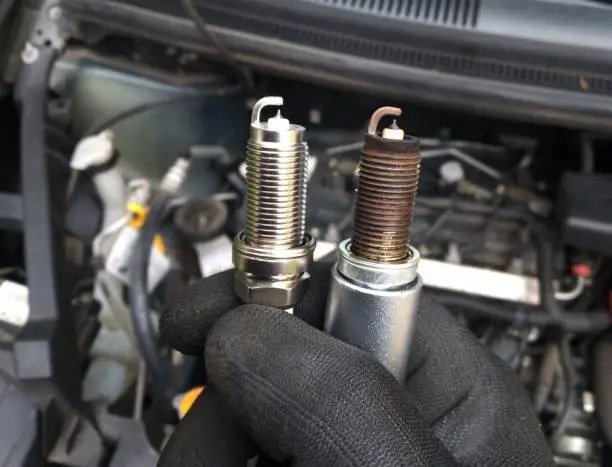
Spark plugs must create a strong spark inside the combustion chamber. As a plug wears, its electrode gap and condition can make it harder for the ignition system to fire the air-fuel mixture reliably.
The weakness may not be obvious at idle. Under acceleration, however, higher cylinder pressure can make a marginal ignition problem much easier to notice.
Common symptoms include:
- Flashing CEL during hard acceleration
- Hesitation or stumbling
- Rough running
- Reduced power
- Shaking under load
What to do: Inspect the spark plugs for excessive wear, fouling, damage, or an incorrect gap according to the vehicle manufacturer’s specifications. If replacement is required, use the correct plug type and gap for the engine.
Safe to drive? Avoid hard acceleration. If the light continues flashing or the engine runs badly, stop driving and have the fault diagnosed.
2. Weak or Failing Ignition Coil
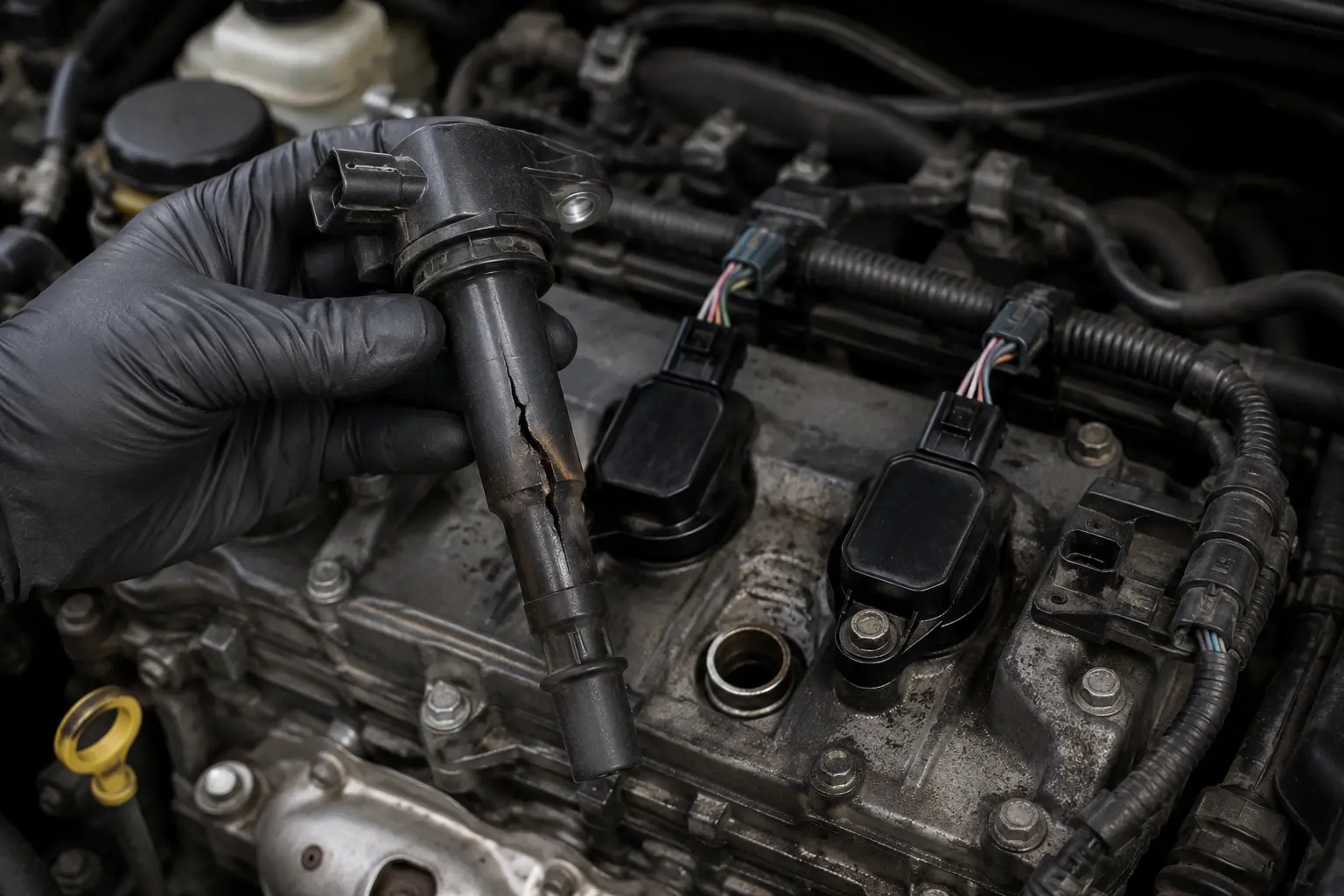
A failing ignition coil is another strong suspect when the engine only misfires under load.
A weak coil may produce enough voltage for normal light-load driving but fail to fire its cylinder consistently when acceleration increases combustion pressure.
You may notice hesitation, jerking, loss of power, or a flashing CEL. On coil-on-plug engines, the fault may affect one cylinder and produce a code such as P0302, indicating that the PCM detected a misfire on cylinder 2.
That doesn’t automatically mean the cylinder 2 coil is bad.
A technician may inspect the spark plug and coil boot, test the ignition circuit, or swap coils between cylinders when appropriate to see whether the misfire follows the coil.
Safe to drive? Persistent flashing, severe shaking, or significant power loss means you should stop driving rather than continue stressing the engine and catalytic converter.
3. Fuel Injector Problem
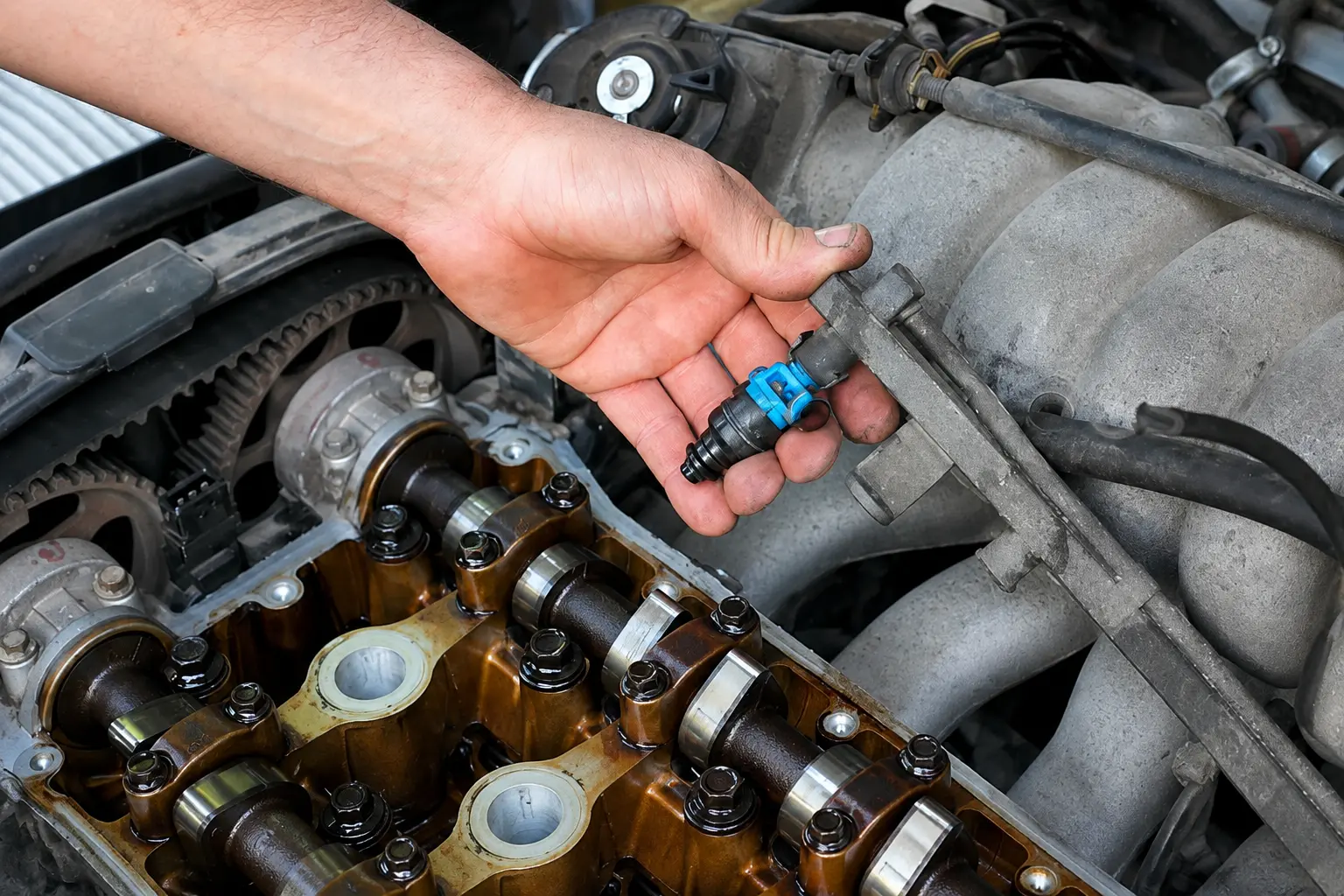
A dirty, restricted, electrically faulty, or mechanically failing fuel injector can prevent a cylinder from receiving the fuel it needs.
The problem can become more noticeable during acceleration because fuel demand increases.
Possible symptoms include:
- Hesitation under throttle
- Engine stumbling
- Rough running
- Misfire codes
- Poor acceleration
- Flashing check engine light
Diagnosis may involve scan-tool data, injector circuit checks, fuel-trim information, or other injector tests.
Don’t replace an injector simply because a misfire code identifies its cylinder. A bad spark plug, ignition coil, wiring problem, compression issue, or another fault can cause a similar code.
4. Low Fuel Pressure or Restricted Fuel Delivery
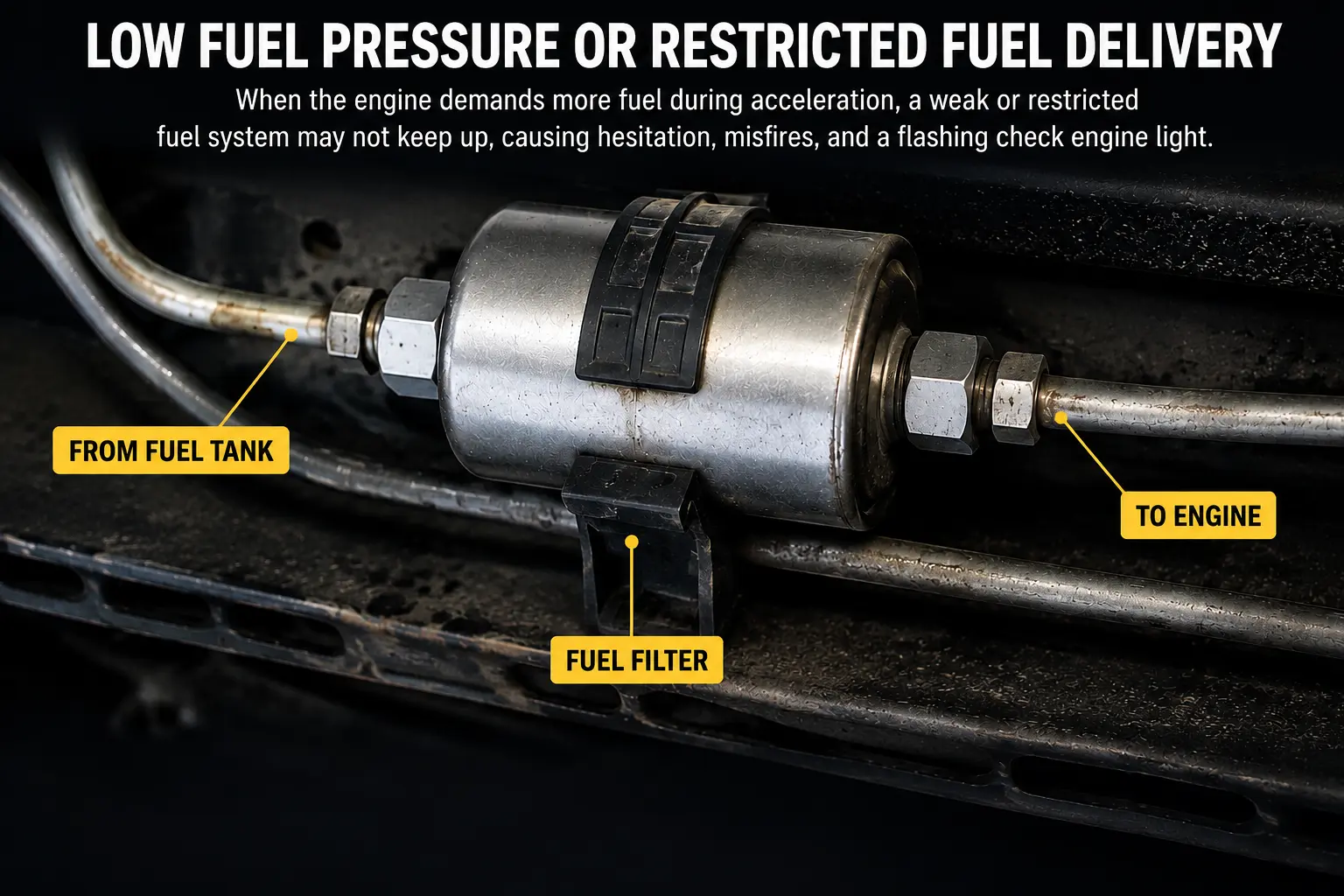
Sometimes the injector itself is fine, but the fuel system cannot supply enough fuel when engine demand increases.
A weak fuel pump, restricted fuel delivery, electrical supply problem, or another pressure-related fault may allow the vehicle to cruise normally but cause hesitation or misfires during heavier acceleration.
Checking actual fuel pressure against the manufacturer’s specification can help separate a fuel-supply problem from an ignition fault.
This isn’t a good situation for guessing and replacing parts. Fuel-system testing requires the correct procedure and specifications for the vehicle.
5. Air Intake or Air-Fuel Metering Problem
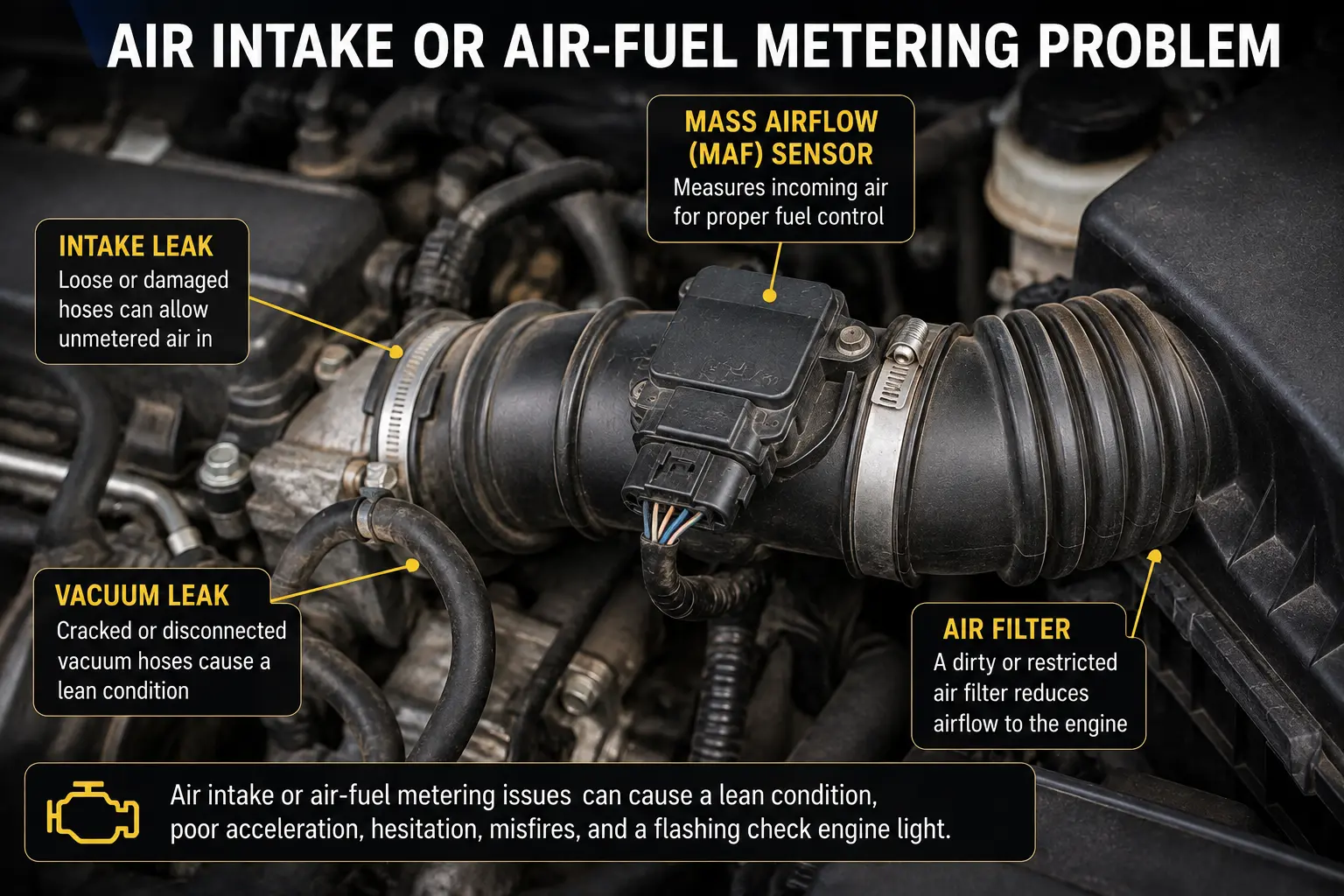
The PCM relies on accurate airflow information to control fueling.
A vacuum leak, intake leak, contaminated or faulty mass airflow (MAF) sensor, or related air-metering problem can disturb the air-fuel mixture enough to cause poor acceleration and misfires.
Depending on the fault, you might also notice an unstable idle, hesitation, lean-condition codes, or unusual fuel-trim readings.
A technician may inspect intake hoses and connections and examine scan-tool data before blaming the MAF sensor itself.
6. Low Compression or Mechanical Engine Problem
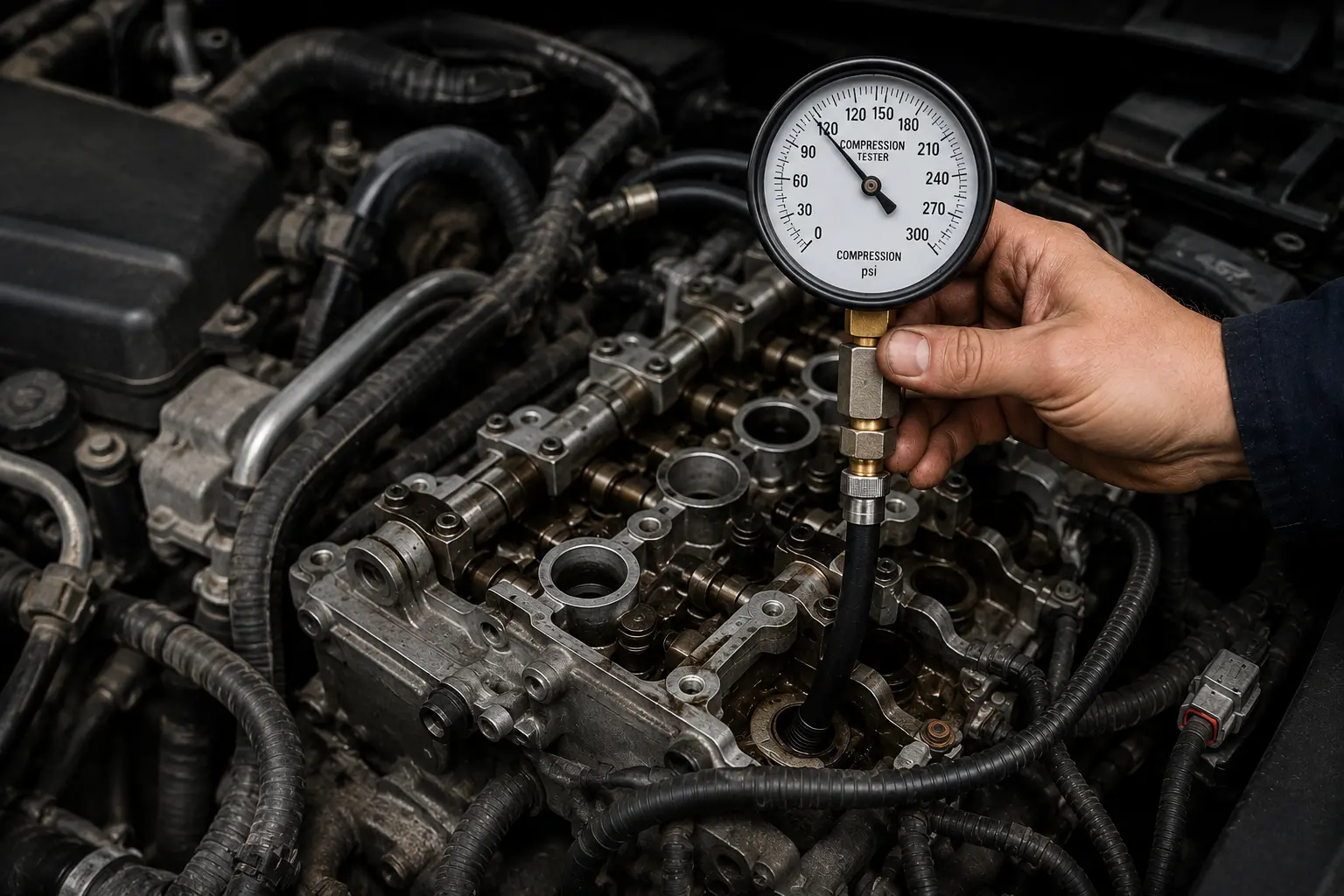
If the spark, coil, injector, and fuel supply check out, the problem may be mechanical.
A cylinder needs adequate compression for proper combustion. Valve problems, cylinder sealing issues, or other internal engine faults can create a recurring misfire.
Mechanical faults are generally less straightforward than replacing a worn spark plug, which is why a compression test or other mechanical testing may be needed when a cylinder continues misfiring after the ignition and fuel systems have been checked.
Check Engine Light Flashing and Car Shaking When Accelerating
A check engine light flashing and car shaking when accelerating strongly suggests that one or more cylinders are not contributing normally.
The shaking happens because engine power becomes uneven as a cylinder misfires. You may also feel jerking, hesitation, or a sudden loss of acceleration.
Don’t keep pressing harder on the accelerator to see whether the vehicle “clears up.” Reduce throttle and find a safe place to stop.
If the engine is shaking badly, has very little power, smells unusual, or the warning continues flashing, the safer choice is to have the vehicle inspected rather than continue driving.
Why Does the Check Engine Light Flash When Accelerating Then Stop?
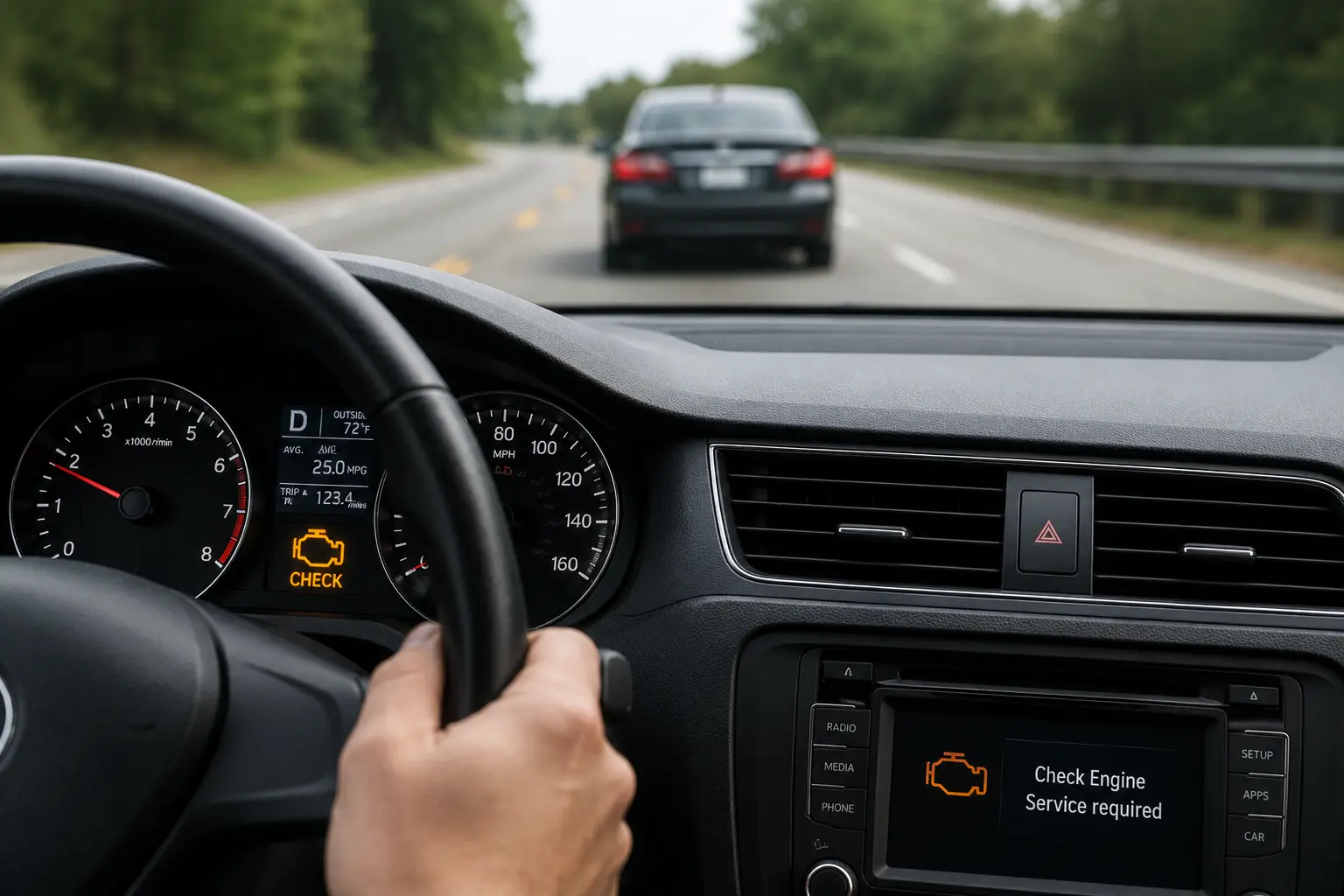
A check engine light flashing when accelerating then stops often points to an intermittent or load-dependent misfire.
Suppose an ignition coil is becoming weak. It may fire normally while you’re cruising at light throttle but begin misfiring when you accelerate uphill or attempt to pass another vehicle.
When you release the accelerator, engine load decreases. The misfire rate may drop, so the PCM stops flashing the warning light.
That does not necessarily mean the fault disappeared.
If your check engine light comes on and goes off, a stored or pending DTC may still provide useful diagnostic information even when the dashboard light is currently off.
What Should You Do When the Check Engine Light Flashes During Acceleration?
First, back off the accelerator. Avoid hard acceleration, high engine loads, and unnecessary driving while the light is flashing.
Then pay attention to how the vehicle behaves.
If it is shaking heavily, jerking, losing substantial power, or continuously flashing the warning, pull over safely and shut the engine off. Continuing to force a badly misfiring engine to operate can overheat and damage the catalytic converter.
If the engine becomes smooth again after reducing throttle, don’t assume the problem has repaired itself.
The next useful step is an OBD-II scan.
Common misfire codes include:
| DTC | General Meaning |
| P0300 | Random/multiple-cylinder misfire detected |
| P0301 | Cylinder 1 misfire detected |
| P0302 | Cylinder 2 misfire detected |
| P0303 | Cylinder 3 misfire detected |
| P0304 | Cylinder 4 misfire detected |
Additional cylinder numbers depend on the engine.
A scan tool may also provide freeze-frame data, which can show conditions such as RPM and calculated engine load around the time the PCM detected the fault.
Remember that a DTC is a diagnostic starting point, not a parts-replacement instruction.
For example, P0303 tells you that the PCM detected a misfire involving cylinder 3. It doesn’t prove that cylinder 3 needs a new ignition coil. The cause could be its spark plug, coil, injector, wiring, compression, or another problem.
Can You Drive With a Flashing Check Engine Light When Accelerating?
You should avoid continuing to drive while the CEL is actively flashing.
A severe misfire can allow unburned fuel to enter the exhaust. That can raise catalytic converter temperatures and potentially cause expensive damage.
The risk is greater if the car is:
- Shaking or jerking
- Losing substantial power
- Running very roughly
- Flashing the CEL continuously
If the flashing stops when you reduce throttle and the engine runs normally again, avoid heavy acceleration and arrange diagnosis as soon as practical.
Whether you can drive with the check engine light on also depends on whether the light is solid or flashing and what other symptoms the vehicle has.
Should You Reset the Light After It Stops Flashing?
Don’t clear the codes just to make the warning disappear.
Stored DTCs and freeze-frame information can help identify what happened when the engine misfired. Clearing them too early can remove useful diagnostic clues.
Fix the underlying problem first. After a proper repair, the PCM may turn the warning off after the required monitoring conditions are met, or the codes can be cleared appropriately.
If needed, resetting the check engine light should come after diagnosis and repair, not before them.
Bottom Line
A flashing check engine light when accelerating most often points to an active misfire that becomes worse as engine load increases. Spark plugs and ignition coils are important suspects, but fuel delivery, injectors, air-metering faults, and mechanical problems can produce similar symptoms.
Reduce throttle when the light starts flashing. If the car shakes badly, loses significant power, or keeps flashing the warning, stop driving when it is safe to do so.
Then scan for OBD-II codes and diagnose the affected cylinder or system before replacing parts. Finding the cause early can prevent a relatively manageable misfire from turning into catalytic converter damage or a more expensive repair.
FAQs
Why does my check engine light flash when I accelerate but not at idle?
The engine is under greater load during acceleration. A weak ignition coil, worn spark plug, fuel-delivery problem, or another marginal fault may work at idle but cause a misfire when cylinder pressure and fuel demand increase.
Why does my check engine light flash only during hard acceleration?
Hard acceleration places greater demand on the ignition and fuel systems. If a component is already weak, the higher load may expose the fault and trigger a misfire severe enough for the PCM to flash the CEL.
Can bad spark plugs cause the check engine light to flash when accelerating?
Yes. Worn, fouled, damaged, or incorrectly gapped spark plugs can misfire under load. However, scan the vehicle and diagnose the affected cylinder before assuming the plugs are responsible.
What does it mean if the check engine light flashes a few times and then stops?
The PCM may have detected a temporary or load-dependent misfire. Even if the flashing stops, the fault can return the next time similar driving conditions occur. Check for stored or pending OBD-II codes.
Can a bad ignition coil cause shaking during acceleration?
Yes. A weak ignition coil can cause its cylinder to misfire, particularly under higher engine load. This can make the vehicle shake, jerk, hesitate, or lose power while accelerating.