

Yes, you can drive with check engine light on in some situations, but only if the light is solid and the vehicle is running normally. A flashing light, severe shaking, stalling, overheating, or major power loss means you should stop driving when it is safe.
A solid light can be triggered by an emissions sensor, EVAP, or other engine-management fault. A flashing light is more urgent and commonly occurs with an active misfire.
Before driving far, check how the vehicle is running and scan for Diagnostic Trouble Codes (DTCs) if possible.
Quick Answer: A solid Check Engine Light with no major symptoms usually allows cautious short-term driving while you arrange diagnosis. If the light flashes or the engine runs badly, stop driving when safe. There is no universal number of miles that is safe to drive with the warning on.
Solid vs Flashing Check Engine Light: What Changes?
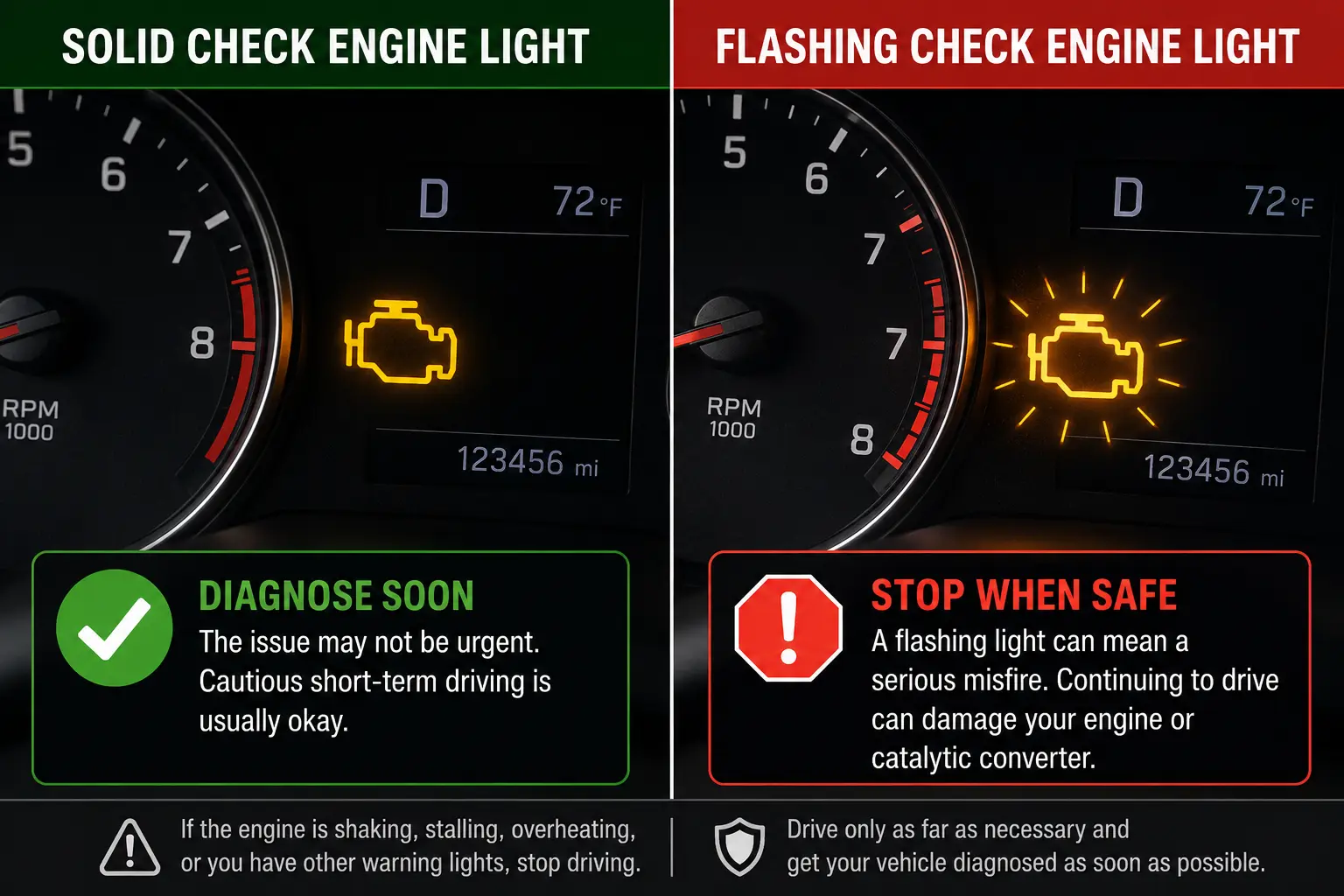
The behavior of the warning is one of the first things to check.
| Situation | What to Do |
| Solid CEL + normal operation | Cautious short-term driving is usually reasonable. Diagnose soon. |
| Solid CEL + rough running | Limit driving and diagnose promptly. Stop if symptoms are severe. |
| Flashing CEL | Reduce engine load and stop driving when safe. |
| CEL + overheating or low oil pressure | Stop driving as soon as safely possible. |
A solid Malfunction Indicator Lamp (MIL) means the ECM/PCM has detected a fault that meets the conditions for illuminating the warning. The cause can range from an EVAP system leak to an air-fuel or sensor-related problem.
A flashing Check Engine Light is different. It can indicate an active misfire severe enough to risk overheating the catalytic converter.
If the vehicle is shaking, jerking, or losing significant power at the same time, continuing to drive can make the problem worse.
How Long Can You Drive With the Check Engine Light On?
There is no fixed safe mileage.
If you’re wondering how long you can drive with the Check Engine Light on, the answer depends on the fault and the vehicle’s symptoms, not a specific number of miles.
A minor EVAP fault may have little immediate effect on drivability. An ignition or fuel-related problem can become much more serious.
If the light is solid and the car drives normally, use the vehicle only as necessary until you can retrieve the fault codes and diagnose the cause.
Do not assume that a car is safe for weeks simply because it still feels normal. Some faults initially cause few noticeable symptoms.
When Should You Stop Driving?
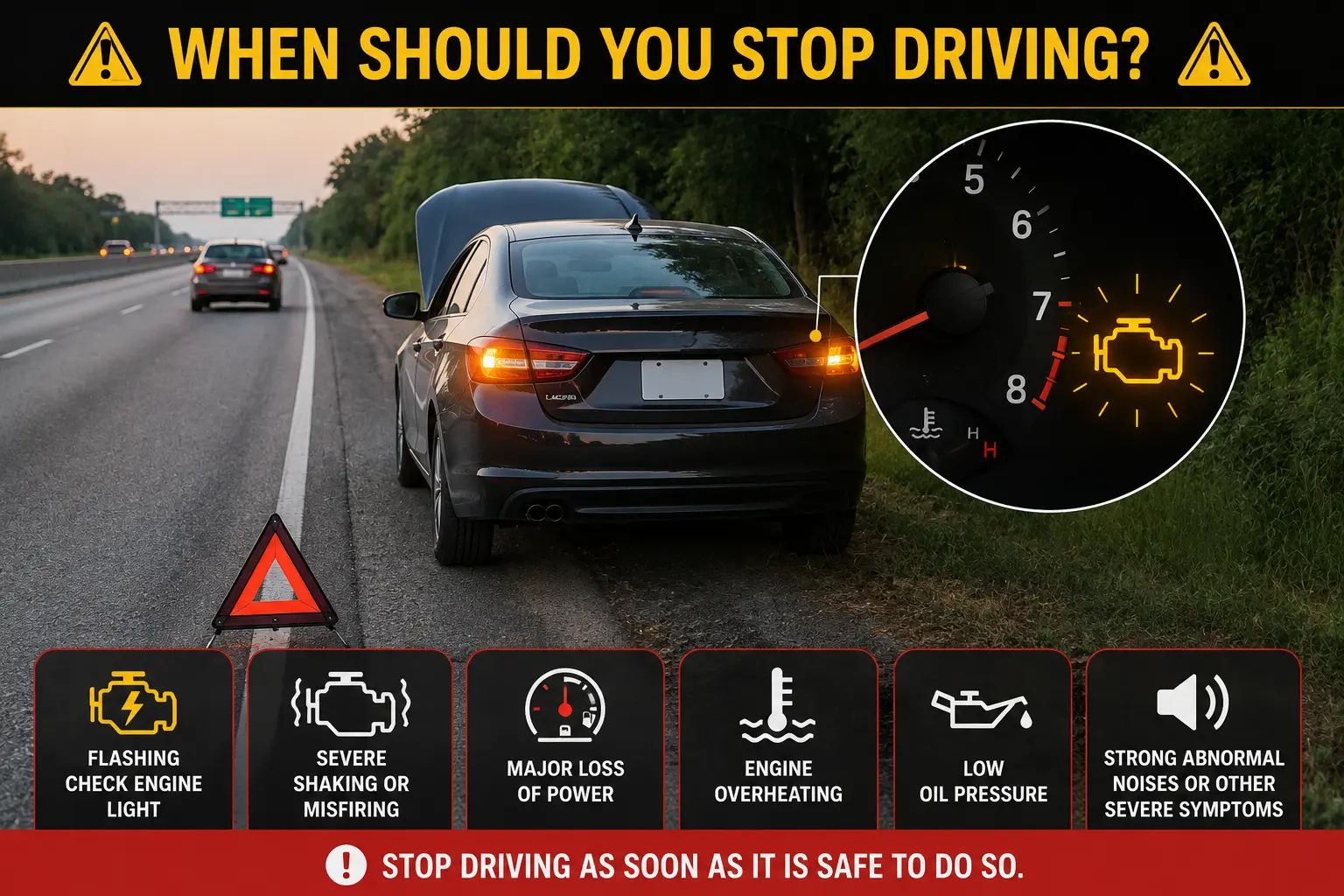
Stop driving when safe if the Check Engine Light is accompanied by signs of a potentially serious problem, including:
- Flashing Check Engine Light
- Severe engine shaking or misfiring
- Major loss of power
- Repeated stalling
- Engine overheating
- Low oil-pressure warning
- Strong abnormal noises or other severe drivability problems
For example, P0300 indicates that the ECM detected random or multiple-cylinder misfires. A misfire can come from ignition, fuel, air, electrical, or mechanical problems.
Do not automatically replace spark plugs or ignition coils just because a misfire code appears. A DTC identifies the fault condition or affected system; further diagnosis is often needed to determine the actual cause.
Can You Drive Long Distance With the Check Engine Light On?
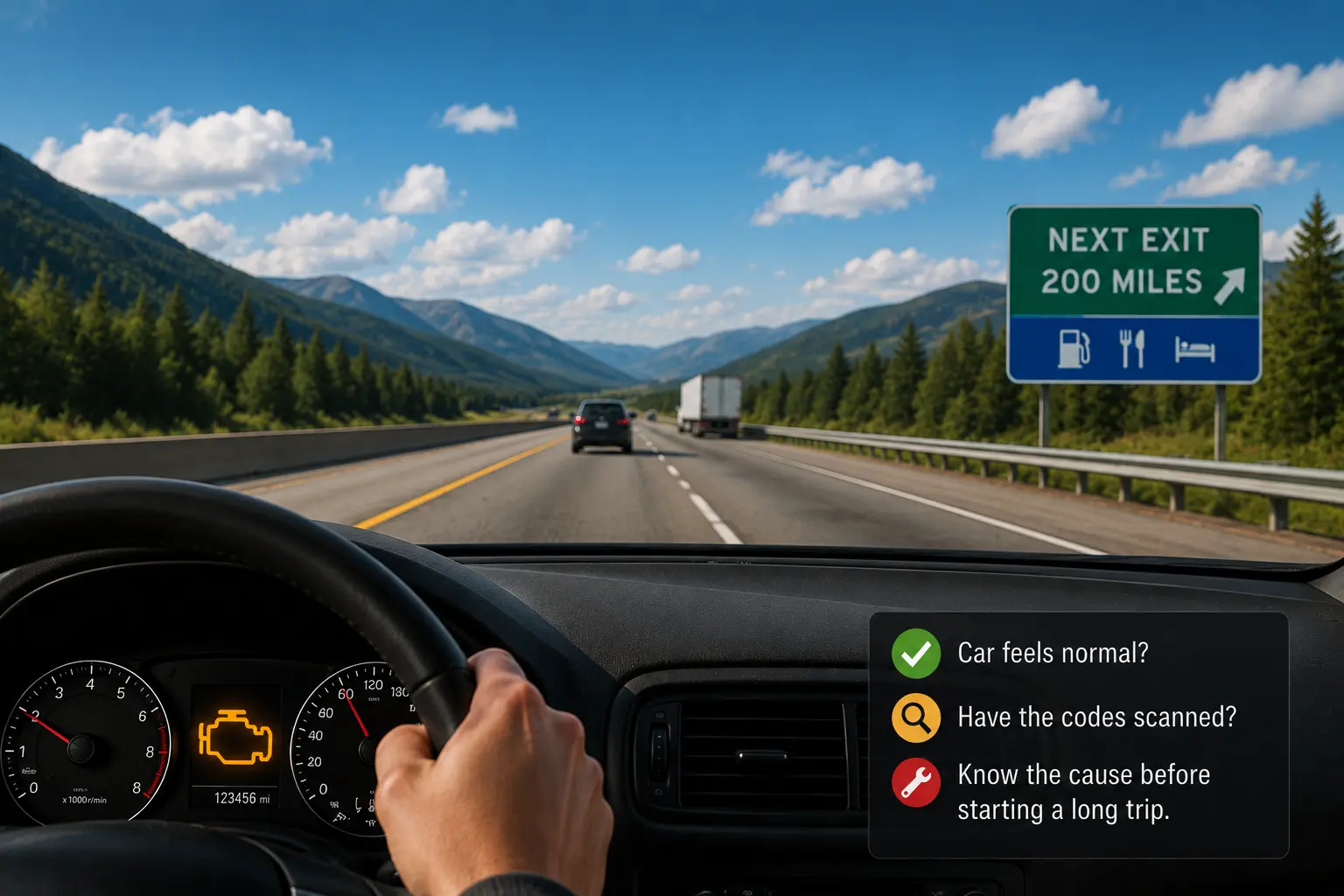
Starting a long trip with an unexplained Check Engine Light is not recommended.
Even when the light is solid and the car seems normal, you do not yet know whether the fault will remain minor or worsen under highway speeds, high engine load, hot weather, or extended driving.
If you must make a short trip and the vehicle is operating normally, cautious driving may be reasonable. But before a long-distance journey, use an OBD-II scanner to find out why the light is on.
If the warning comes and goes rather than remaining continuously illuminated, an intermittent Check Engine Light can still leave stored or pending diagnostic information that helps identify the fault.
What Should You Do Before Driving Further?
If you’re deciding whether you can still drive with the Check Engine Light on, check these things first:
- Look at the warning. Determine whether the CEL is solid or flashing.
- Check how the engine runs. Pay attention to shaking, hesitation, stalling, unusual noises, or reduced power.
- Check other warning lights. An oil-pressure or overheating warning changes the urgency considerably.
- Check the gas cap if appropriate. If the light appears after refueling, make sure the cap is properly secured and its seal is not obviously damaged.
- Scan the vehicle. Retrieve stored and pending DTCs with an OBD-II scanner.
- Save diagnostic information. Record the codes and available freeze-frame data before clearing anything.
- Diagnose the affected system. Use the code and symptoms together instead of replacing whatever component appears in the code description.
There are many possible causes of a Check Engine Light, which is why scanning the vehicle is more useful than guessing based on the warning alone.
The Bottom Line
So, can you drive a car with the Check Engine Light on? Sometimes—but the light’s behavior and the vehicle’s symptoms matter more than the distance.
A solid CEL with normal operation generally allows cautious short-term driving while you arrange diagnosis. Avoid starting a long trip until you know why the warning is on.
A flashing CEL, severe shaking, major power loss, overheating, or another critical warning means you should stop driving when it is safe. Scan the vehicle for DTCs and diagnose the underlying fault rather than simply clearing the warning.
FAQs
Can you drive with an O2 sensor Check Engine Light on?
Possibly, if the light is solid and the vehicle runs normally, but the fault should still be diagnosed. An oxygen-sensor-related DTC does not automatically mean the O2 sensor has failed. Wiring problems, exhaust leaks, or air-fuel mixture faults can also affect sensor readings.
Can driving with the Check Engine Light damage your car?
It depends on the cause. Some emissions faults have little immediate effect on driving, while a severe misfire can damage the catalytic converter. Ignoring an unexplained warning for an extended period can also allow an underlying problem to worsen.
Can I drive to a mechanic with the Check Engine Light on?
Usually, if the CEL is solid, the engine runs smoothly, temperature is normal, and there are no other critical warnings. If the light is flashing or the vehicle is shaking, overheating, stalling, or losing significant power, stop driving when safe and arrange assistance.