
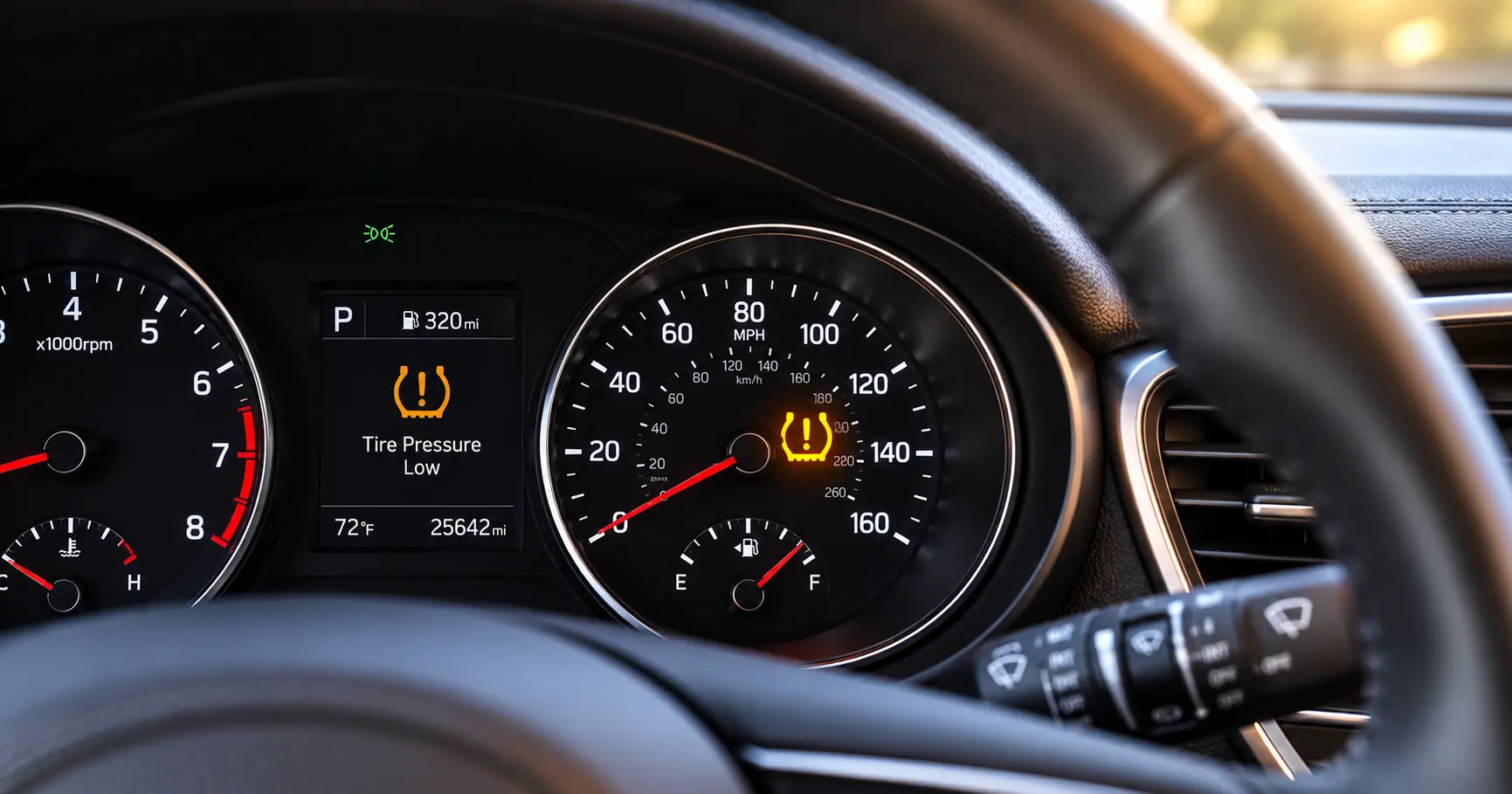
TPMS light can appear suddenly, even if your vehicle seems to be driving normally. Many drivers assume it simply means a tire needs air, but that isn’t always the case. While low tire pressure is the most common reason for the warning, the light can also indicate a faulty tire pressure sensor, a system malfunction, or another issue within the Tire Pressure Monitoring System (TPMS).
Ignoring the warning increases the risk of uneven tire wear, poor fuel economy, longer braking distances, reduced vehicle stability, and, in severe cases, a tire blowout. Even a small drop in tire pressure affects how your tires grip the road, especially during emergency braking or wet weather.
This article explains what the TPMS light means, how the system works, whether it’s safe to drive, the most common causes, how to diagnose the problem correctly, repair costs, and the best ways to keep your TPMS working properly.
What Does the Tire Pressure Warning Light Mean?
TPMS warning light, also known as the tire pressure warning light, low tire pressure light, or tire pressure indicator, alerts you when one or more tires are operating outside the recommended air pressure specified by the vehicle manufacturer.
The warning symbol looks like a horseshoe-shaped tire with an exclamation mark in the center. On many newer vehicles, the instrument cluster may also display the exact tire pressure or identify which tire requires attention.
Although the warning usually indicates low tire pressure, it doesn’t always mean your tire has a puncture. Modern TPMS continuously monitors the condition of your tires and can also detect certain system faults.
The warning may appear because of:
- Low tire pressure
- Overinflated tires
- Cold weather reducing air pressure
- A faulty TPMS sensor
- A dead TPMS sensor battery
- A damaged valve stem sensor
- A TPMS communication problem
- A system malfunction requiring diagnosis
Instead of guessing, always confirm the tire pressure with a reliable tire pressure gauge before deciding what action to take.
Key takeaway: A TPMS light warns that your tire pressure monitoring system has detected either an unsafe tire pressure condition or a fault within the monitoring system itself.
When Is the TPMS Light Normal?
Not every TPMS warning means something is wrong.
There are situations where the warning behaves normally as part of your vehicle’s self-check process.
During Engine Start-Up
When you switch the ignition to the ON position, nearly every dashboard warning light briefly illuminates.
This is called the instrument cluster self-test or bulb check.
If the TPMS light turns off after a few seconds once the engine starts, the system has passed its self-check and is operating normally.
During Cold Weather
Cold temperatures naturally reduce tire pressure.
For approximately every 10°F (5.5°C) drop in outside temperature, tire pressure decreases by about 1 PSI.
As a result, it’s common for the TPMS light to appear on cold mornings and disappear after driving once the tires warm up.
However, don’t ignore the warning simply because it turns off later. Check the tire pressure while the tires are cold and inflate them to the manufacturer’s recommended specification listed on the driver’s door jamb sticker.
After Inflating Tires
Some vehicles automatically recognize the corrected pressure after driving for several minutes.
Others require a manual TPMS reset or relearn procedure before the warning disappears.
Always follow the procedure outlined in your owner’s manual.
How Does a Tire Pressure Monitoring System Work?
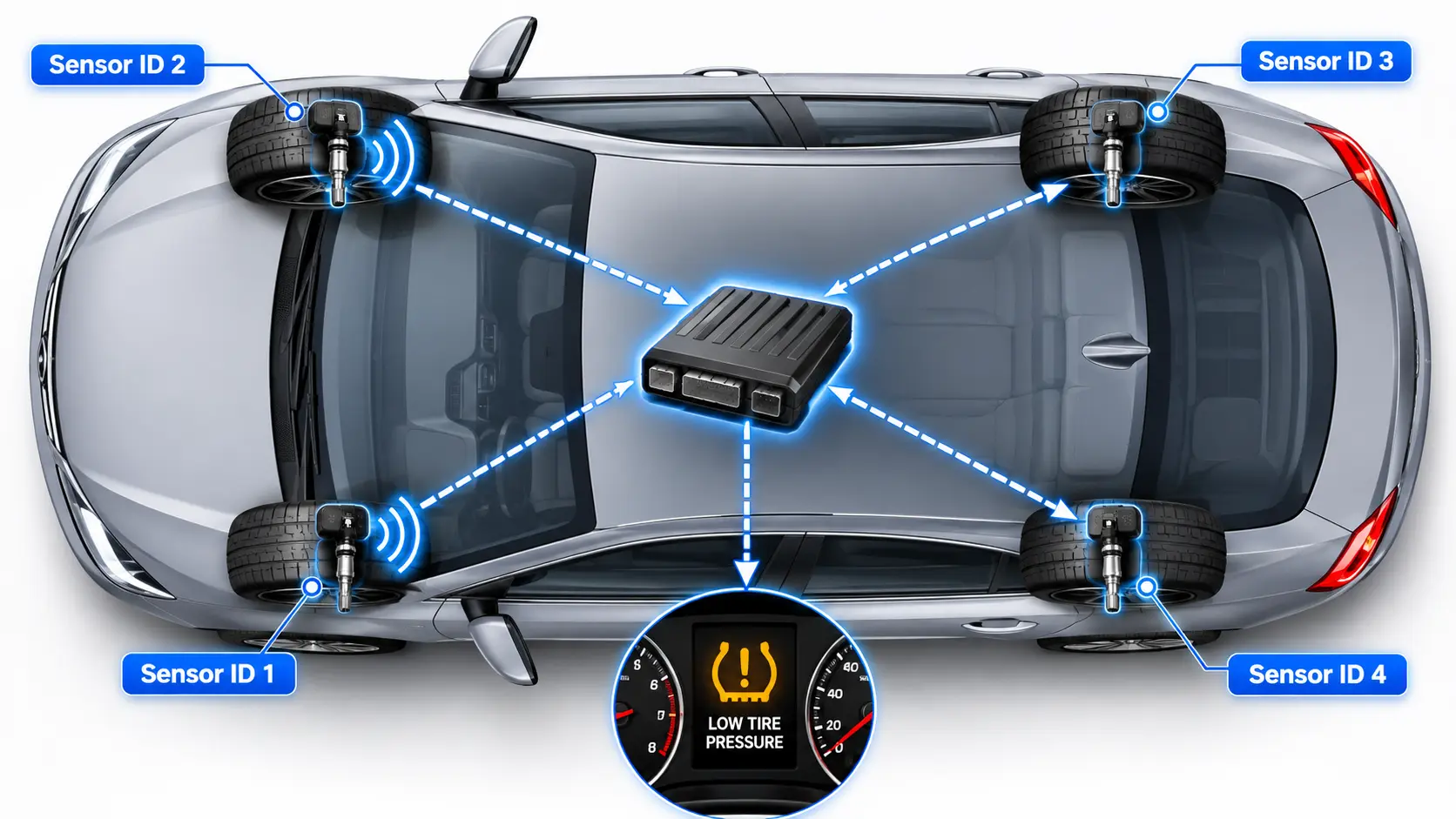
The Tire Pressure Monitoring System (TPMS) continuously monitors tire pressure while you’re driving and alerts you whenever the pressure falls outside a safe operating range.
Since Federal Motor Vehicle Safety Standard (FMVSS) No. 138 requires TPMS on most passenger vehicles sold in the United States, nearly every modern car, SUV, crossover, and light truck is equipped with this important safety feature.
The system helps reduce the risk of driving on underinflated tires, improving:
- Vehicle safety
- Tire life
- Fuel economy
- Steering response
- Braking performance
- Tire traction
Depending on your vehicle, it uses one of two different technologies.
Direct TPMS
A Direct TPMS measures the actual air pressure inside each tire.
Every wheel contains a pressure sensor attached to the valve stem or mounted inside the wheel assembly.
Each sensor continuously measures:
- Tire pressure
- Tire temperature
- Sensor battery status
The sensor then sends this information using a radio frequency (RF) signal to the vehicle’s Electronic Control Unit (ECU) or TPMS control module.
If pressure drops below the programmed threshold, the ECU immediately activates the TPMS warning light.
Advantages
- Highly accurate
- Shows actual PSI on many vehicles
- Detects pressure changes quickly
- Better overall safety
Disadvantages
- Sensors contain sealed batteries
- Sensor replacement is more expensive
- Requires TPMS programming or relearn after certain repairs
Indirect TPMS
An Indirect TPMS works differently.
Instead of measuring tire pressure directly, it uses the vehicle’s ABS wheel speed sensors.
A tire with lower pressure has a slightly smaller rolling diameter and rotates faster than properly inflated tires.
The ABS module detects this speed difference and signals the ECU that one tire may have lost pressure.
Advantages
- No pressure sensors inside the wheels
- Lower maintenance costs
- No internal sensor batteries
Disadvantages
- Less accurate than Direct TPMS
- Cannot display actual tire pressure
- Requires recalibration after tire rotation or inflation adjustments
Direct vs Indirect TPMS
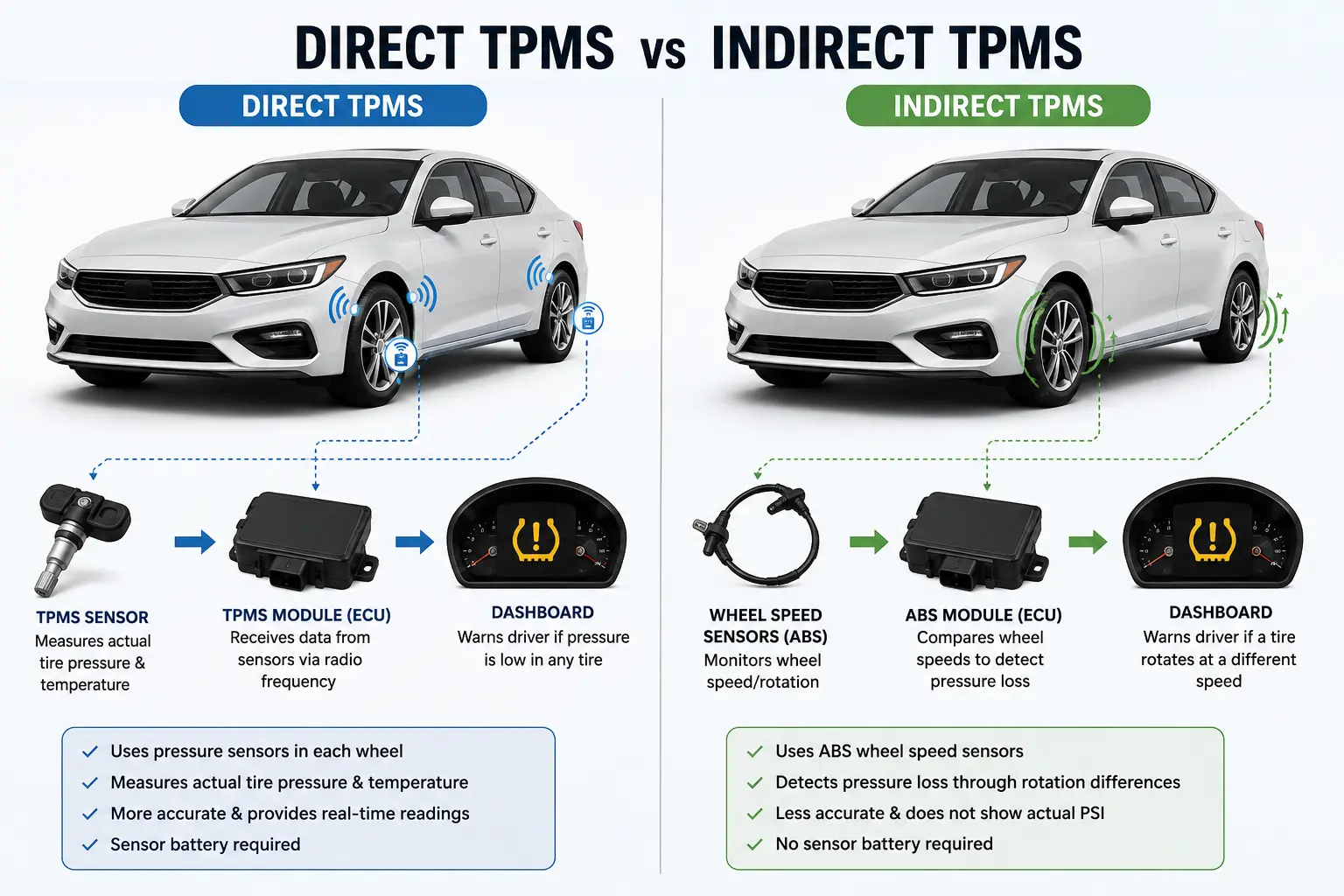
| Feature | Direct TPMS | Indirect TPMS |
| Measures actual tire pressure | Yes | No |
| Uses wheel speed sensors | No | Yes |
| Displays individual PSI | Often | No |
| Contains sensor battery | Yes | No |
| Requires TPMS relearn | Sometimes | Usually after calibration |
| Overall accuracy | Higher | Lower |
Understanding which system your vehicle uses makes diagnosing TPMS problems much easier.
TPMS Warning Light vs Flashing TPMS Light
Many drivers don’t realize there’s an important difference between a solid TPMS light and a flashing TPMS light.
Understanding this difference can help you determine whether you simply need to adjust your tire pressure or schedule a repair.
| Solid TPMS Light | Flashing TPMS Light |
| Low or high tire pressure | TPMS system malfunction |
| Check tire pressure immediately | Diagnose the monitoring system |
| Inflate tires to recommended PSI | Possible failed sensor or communication fault |
| May turn off after inflation | Usually requires professional diagnosis |
If the light flashes for about 60 to 90 seconds after starting the engine before remaining illuminated, it usually indicates a malfunction within the TPMS itself rather than a tire pressure problem.
Common causes include:
- Failed TPMS sensor
- Dead sensor battery
- TPMS control module fault
- Sensor communication failure
- TPMS programming issue
- Damaged sensor during tire replacement
Unlike a solid warning, a flashing TPMS light means the monitoring system may no longer be able to warn you about unsafe tire pressure.
Is It Safe to Drive With the TPMS Light On?
The answer depends on why the warning light is on.
If the light is caused by a small drop in tire pressure, you can usually drive a short distance to safely inflate the affected tire.
However, continuing to drive for long periods on underinflated tires increases heat buildup inside the tire, leading to:
- Faster tread wear
- Poor fuel economy
- Longer stopping distances
- Reduced cornering stability
- Increased risk of a tire blowout
If the TPMS light appears immediately after hitting a pothole, curb, or road debris, stop as soon as it’s safe and inspect all four tires for visible damage.
A rapidly deflating tire requires immediate attention and should never be ignored.
When Should You Stop Driving Immediately?
Pull over safely if you notice:
- A tire losing air rapidly
- Visible sidewall damage
- Smoke or burning rubber smell
- Severe steering pull
- Excessive vibration
- Flapping tire noise
- Flat tire
- Vehicle becoming difficult to control
These symptoms often indicate a puncture, sidewall failure, or significant tire damage rather than a simple pressure change.
Even if the TPMS warning appears to be minor, verifying the tire pressure with a gauge is always safer than relying solely on the dashboard indicator.
Most Common Reasons Why the TPMS Light Comes On
The TPMS warning light doesn’t always mean you have a flat tire. While low tire pressure is the most common cause, several other issues can trigger the warning.
Understanding the underlying cause helps you fix the problem correctly instead of simply resetting the light.
1. Low Tire Pressure
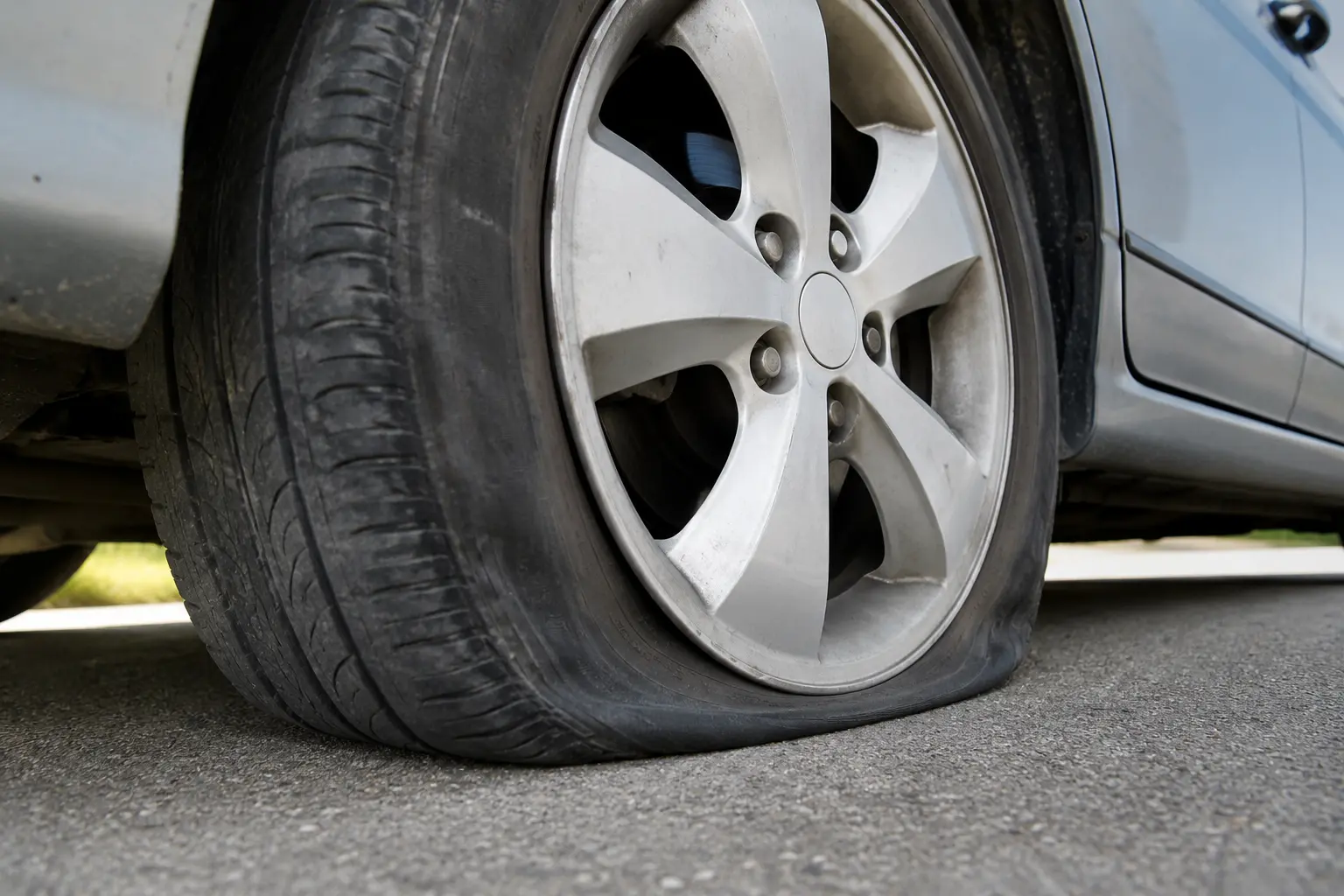
Low tire pressure is responsible for most TPMS warnings.
As tires naturally lose air over time or experience a sudden pressure drop, the Tire Pressure Monitoring System detects the change and illuminates the warning light.
Even a tire that looks normal can be significantly underinflated. That’s why you should always verify the pressure using a tire pressure gauge rather than relying on a visual inspection.
Common causes of low tire pressure include:
- Normal air loss over time
- Small punctures from nails or screws
- Leaking valve stem
- Damaged wheel rim
- Tire bead leaks
- Seasonal temperature changes
Driving with underinflated tires can lead to:
- Uneven tread wear
- Reduced fuel economy
- Longer braking distances
- Poor steering response
- Increased rolling resistance
- Tire overheating
- Greater risk of a blowout
Always inflate your tires to the recommended cold tire pressure shown on the driver’s door jamb sticker, not the maximum PSI printed on the tire sidewall.
2. Cold Weather Temperature Changes
Many drivers notice the TPMS light turning on during winter mornings.
This is completely normal.
Air contracts as temperatures fall. For approximately every 10°F (5.5°C) drop in temperature, tire pressure decreases by about 1 PSI.
If your tires were already close to the minimum recommended pressure, the overnight temperature drop may be enough to trigger the warning.
Typical signs include:
- TPMS light appears in the morning
- Warning disappears after driving
- Tire pressure measures slightly below specification
- No visible tire damage
Instead of simply resetting the warning, check each tire when it’s cold and inflate it to the manufacturer’s recommended pressure.
3. Overinflated Tires
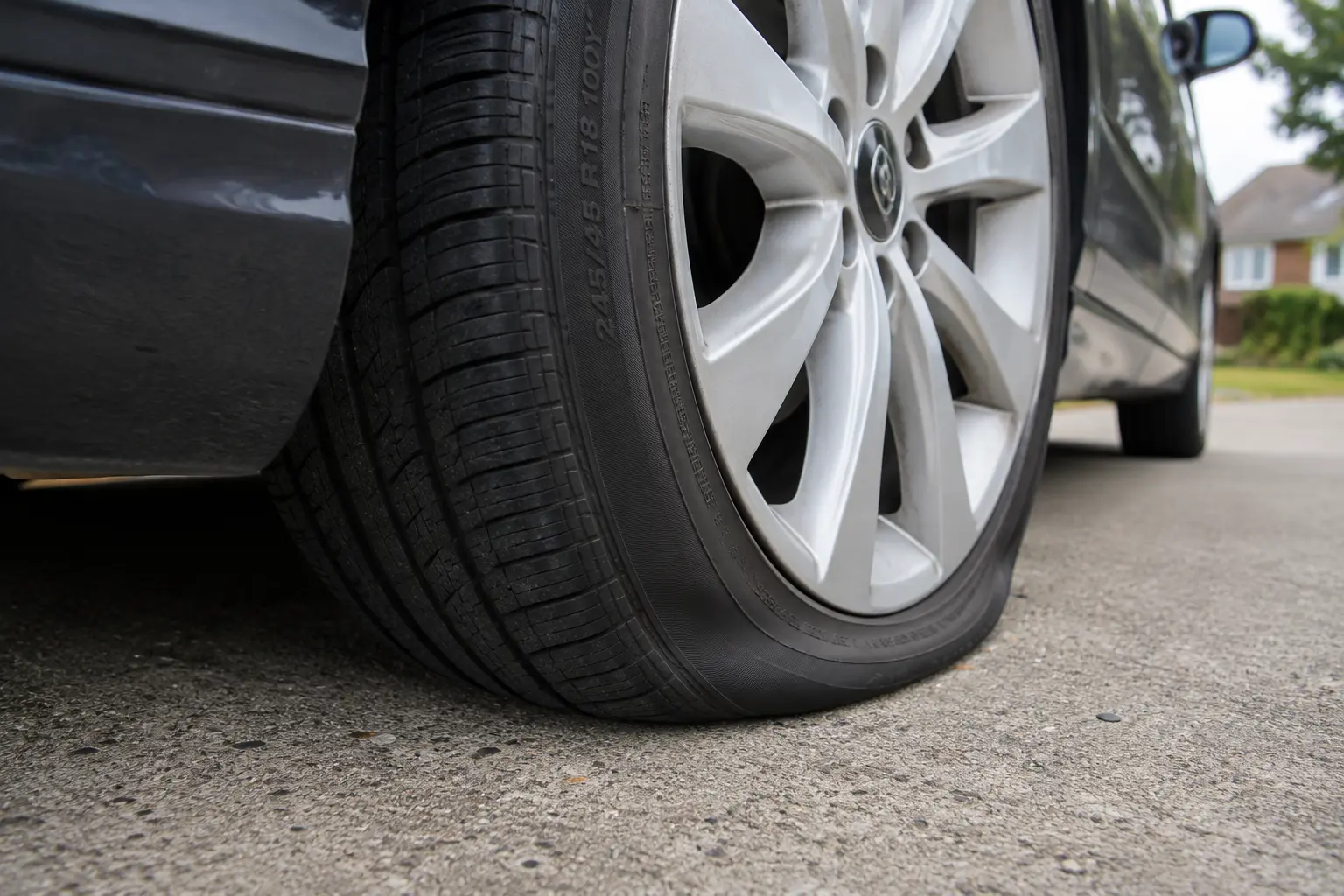
Many people believe adding extra air improves fuel economy.
In reality, excessive tire pressure can also trigger the TPMS warning on some vehicles.
Overinflated tires reduce the tire’s contact patch with the road, resulting in:
- Less traction
- Harsher ride quality
- Center tread wear
- Reduced braking performance
- Increased impact damage from potholes
If you’ve recently inflated your tires, verify the pressure with a gauge and adjust it to the correct PSI.
4. Faulty TPMS Sensor
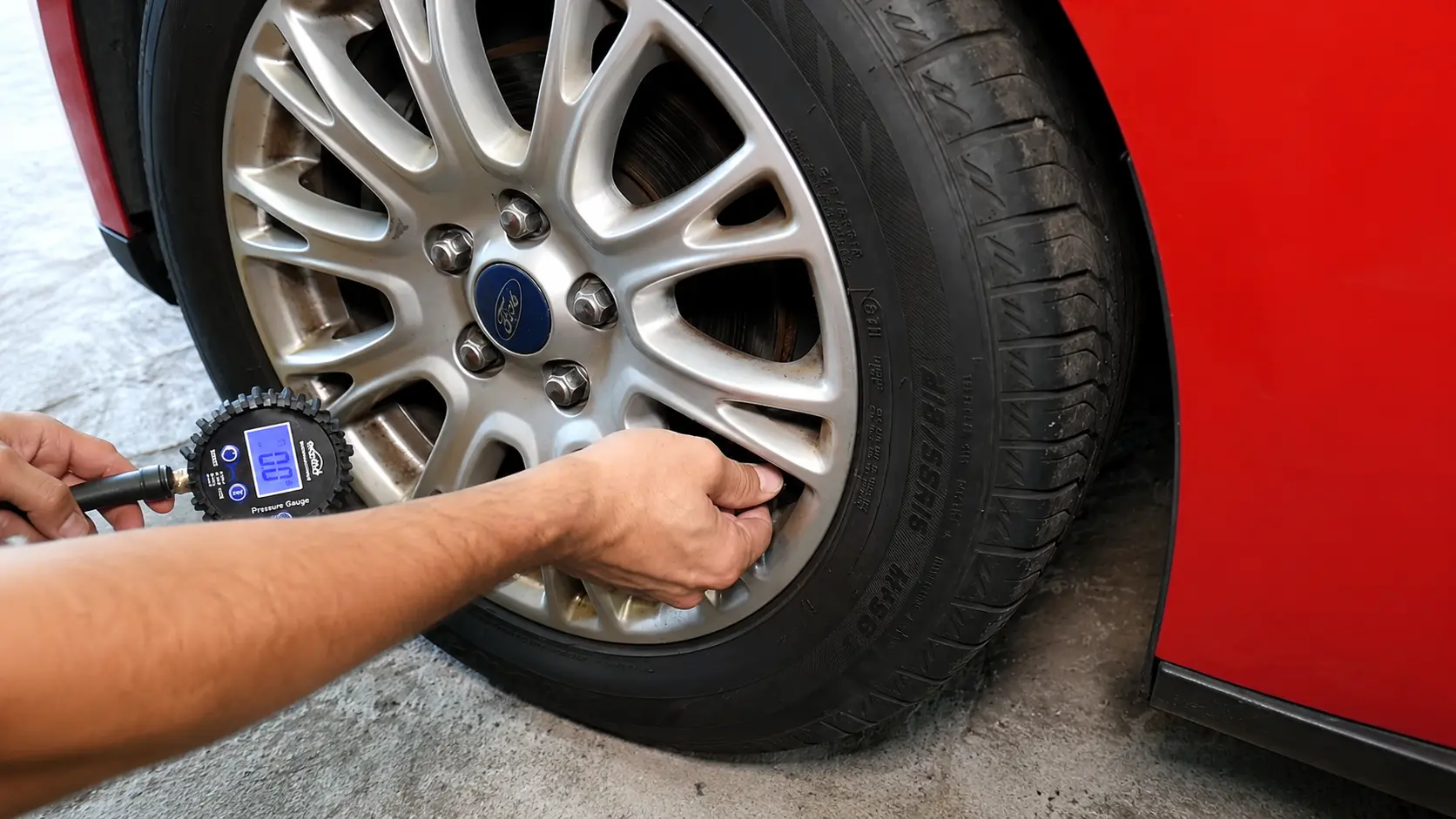
Each Direct TPMS wheel contains a pressure sensor that continuously measures tire pressure and sends data to the vehicle’s Electronic Control Unit (ECU) using a radio frequency (RF) signal.
Like any electronic component, these sensors can fail over time.
Common causes include:
- Internal electronic failure
- Water intrusion
- Physical damage during tire replacement
- Corrosion
- Impact damage from potholes
Symptoms include:
- Flashing TPMS light
- Warning remains on after correcting tire pressure
- One tire stops reporting pressure
- TPMS warning returns repeatedly
A professional TPMS scan tool can identify which sensor has stopped communicating.
5. Dead TPMS Sensor Battery
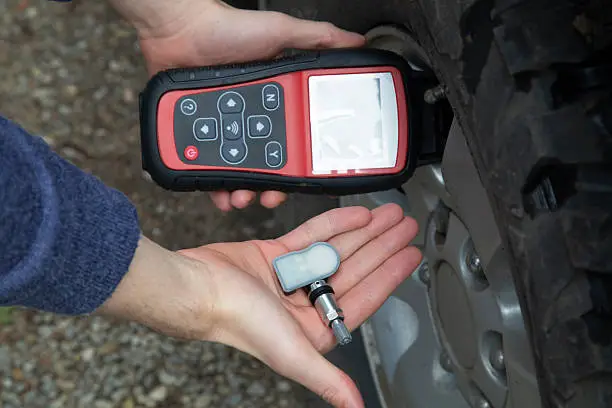
One of the most overlooked causes of a TPMS warning is a depleted sensor battery.
Every Direct TPMS sensor contains a sealed lithium battery.
Unlike your vehicle’s battery, this battery cannot be recharged or replaced separately.
Most TPMS sensor batteries last between 5 and 10 years, depending on driving conditions and mileage.
Signs of a failing sensor battery include:
- Flashing TPMS light
- Intermittent warning
- Sensor communication loss
- TPMS malfunction message
Once the battery reaches the end of its service life, the entire sensor must be replaced.
6. TPMS Light On but Tires Are Fine
This is one of the most common questions drivers ask.
If all four tires are properly inflated but the warning remains illuminated, the issue usually lies within the TPMS rather than the tires themselves.
Possible causes include:
- Faulty TPMS sensor
- Dead sensor battery
- TPMS control module fault
- Incorrect TPMS relearn procedure
- Sensor programming error
- Damaged valve stem sensor
- Radio frequency communication problem
- Incorrect tire pressure calibration
Rather than repeatedly resetting the warning, have the system scanned using a professional TPMS diagnostic tool.
7. Tire Rotation Without Performing a TPMS Relearn
Rotating tires helps promote even tread wear, but on many vehicles, the TPMS must be recalibrated afterward.
If a relearn procedure isn’t completed, the ECU may no longer recognize which sensor belongs to each wheel position.
As a result, you may experience:
- Incorrect tire location displayed
- TPMS warning remaining on
- Incorrect pressure readings
- Flashing warning light
Some vehicles perform the relearn automatically, while others require a TPMS reset button, an onboard menu procedure, or a dedicated TPMS scan tool.
8. New Tires or Wheels Installed
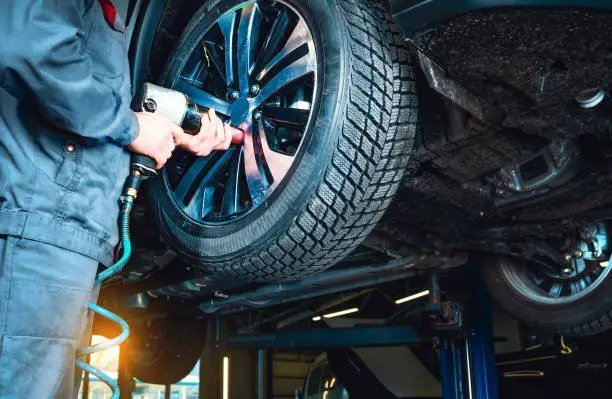
Installing new tires or aftermarket wheels can also trigger the TPMS warning.
Common reasons include:
- Sensor accidentally damaged during tire installation
- Sensor not transferred to the new wheel
- Incorrect sensor programming
- Missing TPMS sensor
- Universal sensor not programmed correctly
- Relearn procedure not completed
Whenever tires or wheels are replaced, confirm that all TPMS sensors are functioning correctly before leaving the tire shop.
9. Damaged Valve Stem
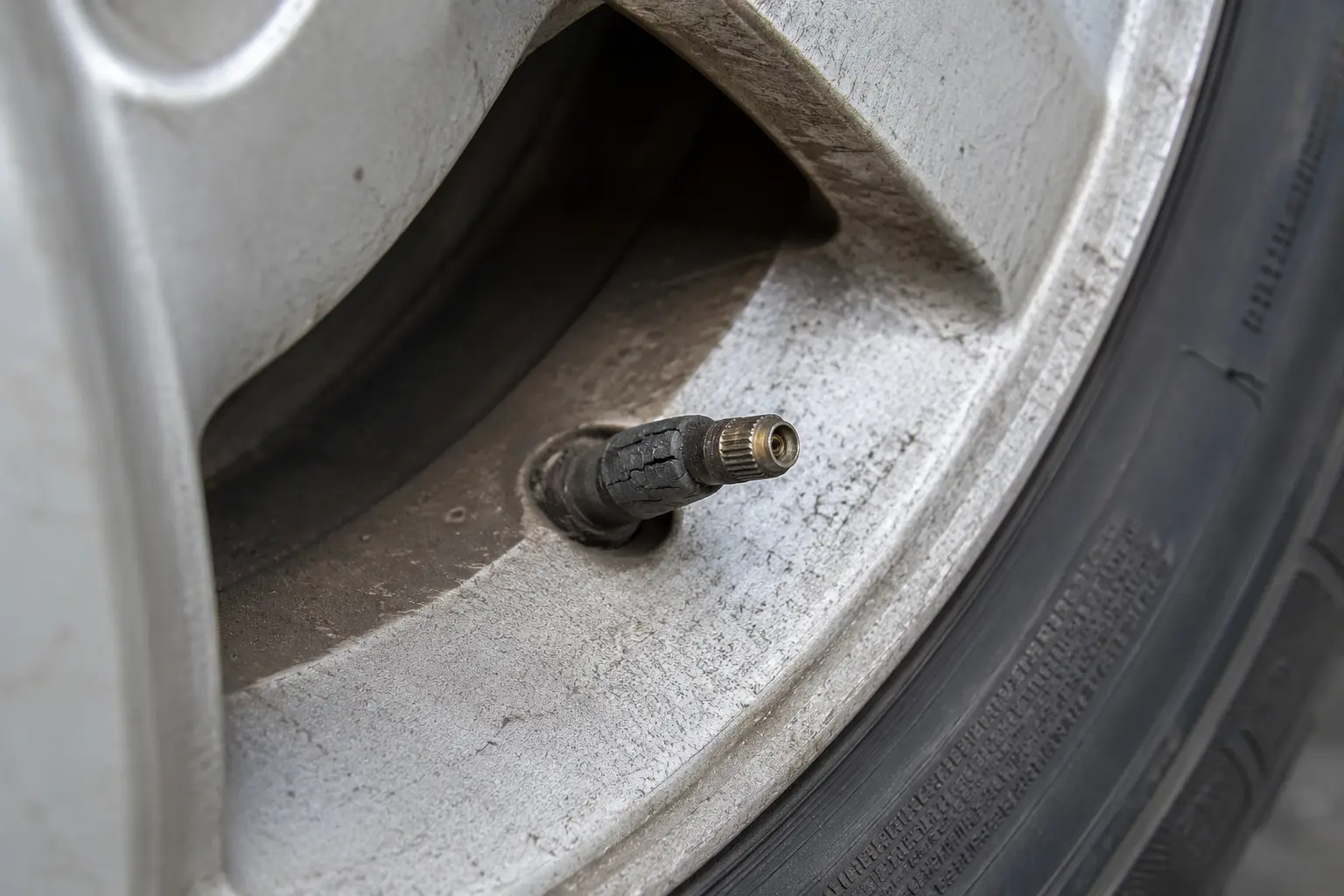
On many Direct TPMS systems, the pressure sensor is integrated with the valve stem.
If the valve stem becomes bent, cracked, or corroded, air may slowly leak from the tire.
Warning signs include:
- Slow pressure loss
- TPMS light returns repeatedly
- Air leaking around the valve stem
- Visible corrosion
Replacing a damaged valve stem early can prevent complete sensor failure.
10. Faulty ABS Wheel Speed Sensor (Indirect TPMS)
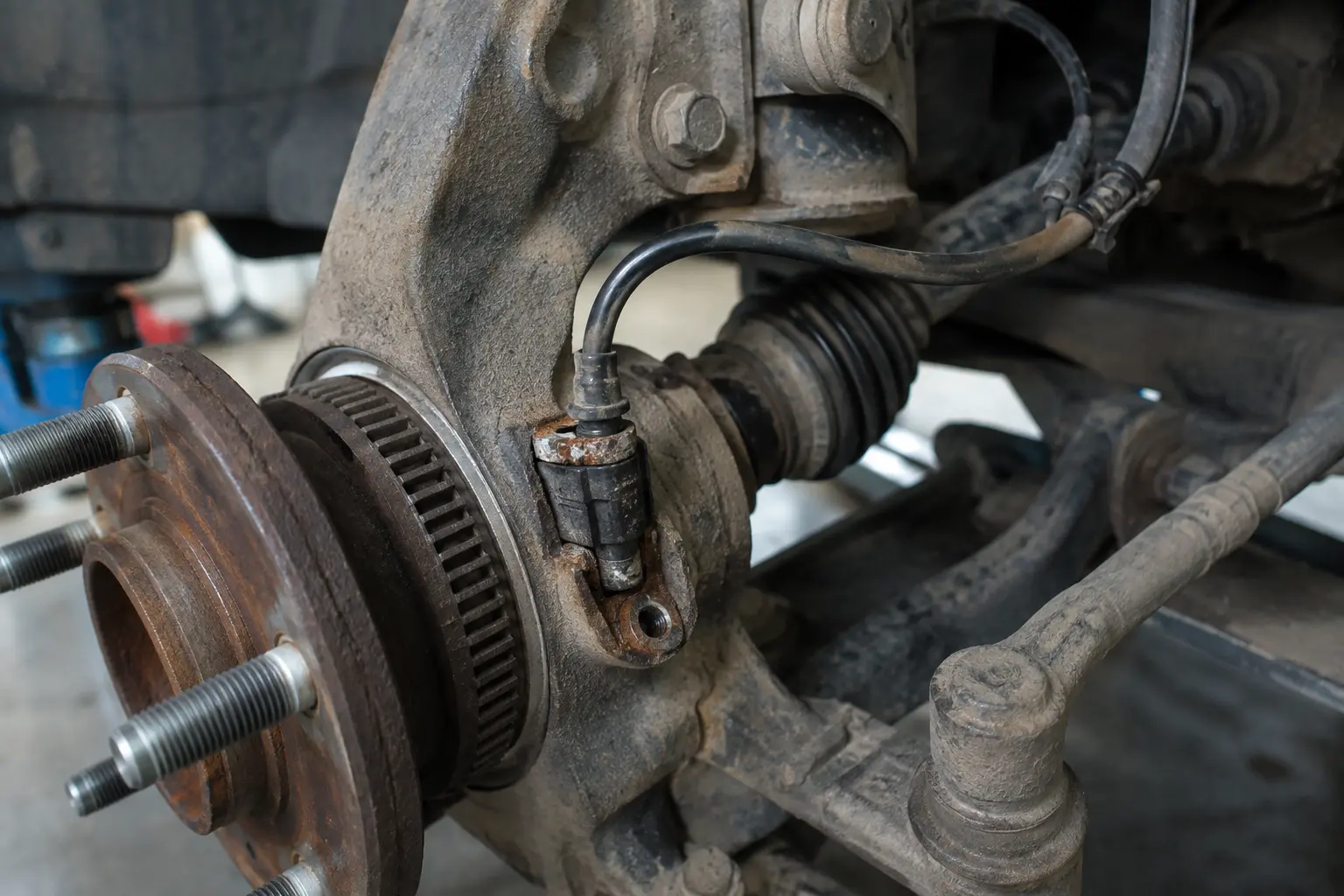
Vehicles equipped with an Indirect TPMS don’t measure air pressure directly.
Instead, they monitor wheel speed through the ABS wheel speed sensors.
If one of these sensors fails, the system may incorrectly interpret wheel rotation as a tire pressure problem.
Possible symptoms include:
- TPMS warning
- ABS warning light
- Traction Control warning
- Electronic Stability Control (ESC) warning
Diagnosing these issues often requires an OBD-II scanner capable of reading ABS and TPMS-related Diagnostic Trouble Codes (DTCs).
11. TPMS Control Module Problems
Although uncommon, the TPMS control module itself can fail.
This module receives pressure data from every wheel sensor and communicates with the instrument cluster.
If it develops an internal fault, the TPMS warning may remain illuminated even when every sensor is functioning correctly.
Typical symptoms include:
- Flashing TPMS light
- Multiple sensor communication failures
- No tire pressure readings displayed
- TPMS reset unsuccessful
A professional diagnostic scan is usually required to confirm module failure.
Symptoms That Often Appear Alongside a TPMS Warning
The TPMS light isn’t always the only indication that something is wrong. Many vehicles exhibit additional symptoms that can help identify the underlying issue before it becomes more serious.
Uneven Tire Wear
Incorrect tire pressure changes how the tire contacts the road surface.
- Underinflated tires typically wear along both shoulders.
- Overinflated tires wear faster in the center of the tread.
Monitoring tread wear regularly can help detect pressure problems before the TPMS light appears.
Poor Fuel Economy
Underinflated tires create more rolling resistance, forcing the engine to work harder.
As a result, you may notice:
- Increased fuel consumption
- Reduced driving range
- More frequent fuel stops
Maintaining the correct tire pressure is one of the easiest ways to improve fuel efficiency.
Reduced Steering Response
Low tire pressure affects vehicle handling.
You may notice:
- Slower steering response
- Vehicle feels unstable in corners
- Increased body roll
- Less precise control
These symptoms become more noticeable at highway speeds or during emergency maneuvers.
Longer Braking Distance
Properly inflated tires provide maximum road contact.
When tire pressure is too low or too high, braking performance can suffer, increasing stopping distance—particularly on wet roads.
Vehicle Pulling to One Side
If one tire loses significantly more pressure than the others, the vehicle may begin drifting or pulling toward one side while driving.
This symptom should never be ignored because it may also indicate a puncture or rapid air loss.
Steering Wheel Vibration
Uneven tire pressure can create an imbalance in how each tire rolls.
This may result in vibrations felt through the steering wheel, especially at highway speeds.
What Should You Do When the TPMS Warning Light Comes On?
A TPMS warning doesn’t always mean you need to stop immediately, but you should address it as soon as it’s safe. Ignoring it can lead to poor handling, uneven tire wear, reduced fuel economy, or even a tire blowout.
1. Stay Calm
Reduce your speed if necessary and find a safe place to inspect your tires. If the vehicle feels unstable or you notice vibration, steering pull, or unusual tire noise, stop driving as soon as it’s safe.
2. Inspect Your Tires
Look for obvious signs of damage, including:
- Flat or low tire
- Nail or screw in the tread
- Sidewall cut or bulge
- Wheel damage
- Air leaking from the valve stem
A tire may still look normal even if it’s low on air, so always check the pressure with a gauge.
3. Check Tire Pressure
Use a tire pressure gauge to measure all four tires when they’re cold. Compare the readings with the recommended PSI on the driver’s door jamb sticker, not the maximum PSI shown on the tire sidewall.
4. Adjust Tire Pressure
Inflate or deflate the tires until they reach the manufacturer’s recommended pressure. Then drive for a few minutes to see if the TPMS warning turns off.
5. Reset the TPMS (If Needed)
Some vehicles reset automatically, while others require a TPMS reset button, infotainment menu, drive cycle, or relearn procedure. If the light stays on after correcting the pressure, the system should be inspected.
6. Don’t Ignore a Flashing TPMS Light
A flashing TPMS light usually indicates a system malfunction rather than low tire pressure. Common causes include a failed TPMS sensor, dead sensor battery, communication fault, or programming issue. In most cases, professional diagnosis with a TPMS scan tool is required.
How to Check Tire Pressure Correctly
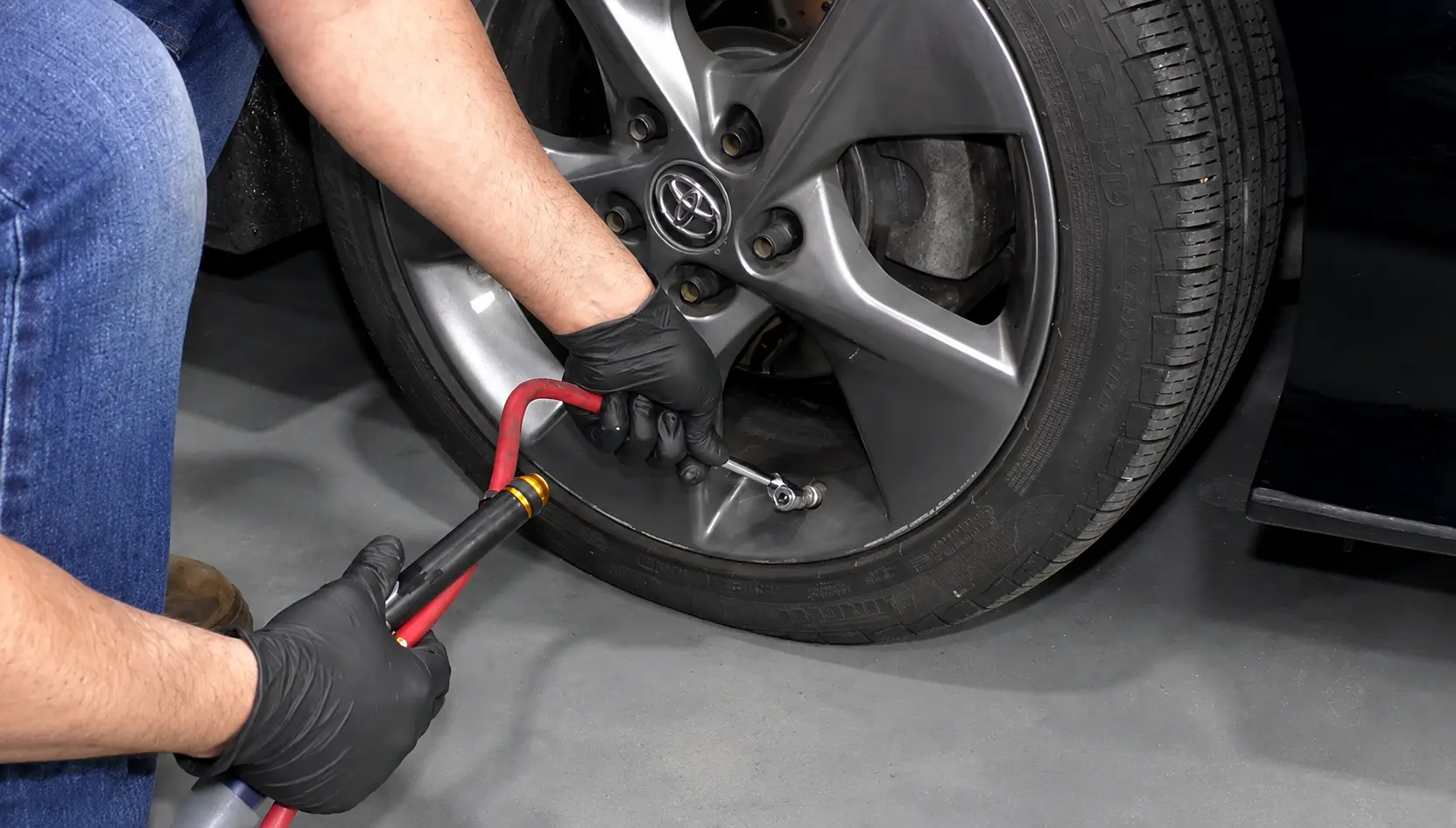
Checking your tire pressure only takes a few minutes and helps prevent unnecessary TPMS warnings.
- Park the vehicle on a level surface and allow the tires to cool.
- Remove the valve stem cap and use a tire pressure gauge to check each tire.
- Compare the reading with the recommended PSI on the driver’s door jamb sticker.
- Inflate or deflate the tire as needed, then reinstall the valve cap.
- Repeat the process for all four tires, and check the spare tire if it’s equipped with a TPMS sensor.
How to Reset the TPMS Light
Many drivers assume the warning will disappear immediately after adding air.
While some vehicles reset automatically, others require additional steps.
Method 1: TPMS Reset Button
Some vehicles have a dedicated TPMS reset button located:
- Below the steering wheel
- Inside the glove box
- Near the center console
Press and hold the button until the TPMS light blinks several times.
Method 2: Infotainment Settings Menu
Many modern vehicles allow TPMS calibration through the dashboard settings.
Navigate to:
Vehicle Settings → Tire Pressure Monitoring → Reset or Calibrate TPMS
The exact menu varies by manufacturer.
Method 3: Automatic Drive Cycle
Certain vehicles automatically relearn tire pressure after driving.
Typically, you’ll need to drive:
- Between 10 and 20 minutes
- At speeds above approximately 30 mph (48 km/h)
Refer to the owner’s manual for the correct procedure.
Method 4: TPMS Relearn Procedure
After replacing a sensor, rotating tires, or installing new wheels, some vehicles require a TPMS relearn.
This process teaches the ECU the location and identification number of each wheel sensor.
Without a relearn, the TPMS may display incorrect tire locations or continue showing a warning.
Method 5: TPMS Programming Tool
When installing new TPMS sensors, technicians often use a dedicated TPMS programming tool to register the new sensor IDs with the vehicle.
This ensures proper communication between the sensors and the TPMS control module.
How to Diagnose TPMS Problems
If the TPMS warning remains illuminated after correcting tire pressure, systematic diagnosis is the next step.
Professional technicians usually follow this process.
Step 1: Check Tire Pressure
Confirm every tire is inflated to the manufacturer’s recommended specification.
Step 2: Inspect the Tires
Look for:
- Punctures
- Damaged valve stems
- Wheel damage
- Uneven tread wear
- Air leaks
Step 3: Scan the TPMS Sensors
A TPMS scan tool communicates directly with each wheel sensor.
It checks:
- Sensor ID
- Battery condition
- Signal strength
- Pressure reading
- Temperature data
A sensor that fails to communicate usually requires replacement.
Step 4: Scan the Vehicle With an OBD-II Scanner
Some TPMS and ABS faults generate Diagnostic Trouble Codes (DTCs) stored in the ECU or TPMS control module.
Reading these codes helps narrow the diagnosis.
Step 5: Inspect the ABS Wheel Speed Sensors (Indirect TPMS)
Vehicles equipped with an Indirect TPMS rely on the ABS.
A faulty wheel speed sensor can trigger TPMS warnings even when tire pressure is correct.
Step 6: Perform a TPMS Relearn
If all sensors are functioning correctly, complete the manufacturer’s relearn or calibration procedure.
Many persistent TPMS warnings are resolved after proper sensor relearning.
TPMS Light Repair Costs
Repair costs vary depending on the failed component, your vehicle, and labor rates.
The table below provides general estimates for the United States.
| Repair | Average Cost (Parts + Labor) |
| Tire inflation | Free–$5 |
| Tire puncture repair | $20–$50 |
| TPMS diagnosis | $50–$120 |
| TPMS sensor replacement | $60–$150 per sensor |
| TPMS relearn | $20–$80 |
| TPMS programming | $40–$100 |
| Valve stem replacement | $20–$60 |
| TPMS control module replacement | $200–$600 |
Replacing one failed sensor doesn’t always mean the remaining sensors need replacement immediately. However, if they’re all the same age, it’s worth discussing future replacement with your technician because their internal batteries typically reach the end of their service life around the same time.
How Long Do TPMS Sensors Last?
Many drivers don’t think about their TPMS sensors until the warning light appears. Unlike tires, which are replaced several times throughout a vehicle’s life, TPMS sensors are designed to last for many years before they eventually fail.
Most Direct TPMS sensors have an internal sealed lithium battery that typically lasts 5 to 10 years or approximately 100,000 to 150,000 miles, depending on driving conditions and vehicle usage.
Because the battery is permanently sealed inside the sensor, it cannot be replaced separately. Once the battery reaches the end of its service life, the entire TPMS sensor must be replaced.
Several factors can shorten sensor lifespan, including:
- Frequent driving in extreme temperatures
- Exposure to road salt and moisture
- Physical damage from potholes or curbs
- Corrosion around the valve stem
- Damage during tire mounting or removal
If one sensor battery fails and all sensors were installed at the factory, the remaining sensors are often close to the end of their lifespan as well. While replacing all four sensors isn’t always necessary, many vehicle owners choose to do so during a tire replacement to avoid additional labor costs later.
How to Prevent TPMS Problems
Most TPMS issues can be prevented with regular tire maintenance and inspections. Follow these simple tips to keep the system working properly.
Check Tire Pressure Regularly
Check your tire pressure at least once a month and before long trips using a reliable tire pressure gauge. Always inflate tires to the recommended PSI listed on the driver’s door jamb sticker.
Inspect Valve Stems
Look for cracked, bent, or corroded valve stems during routine maintenance, as they can cause slow air leaks and trigger the TPMS warning.
Rotate Tires on Schedule
Rotate your tires according to your vehicle manufacturer’s maintenance schedule. If required, perform a TPMS relearn after the rotation.
Avoid Road Hazards
Drive carefully to avoid potholes and curbs, which can damage TPMS sensors, valve stems, wheels, and tires.
Replace Aging TPMS Sensors
If you’re installing new tires and the TPMS sensors are nearing the end of their service life (typically 5–10 years), consider replacing them at the same time to save on future labor costs.
Perform a TPMS Relearn After Service
Whenever you replace TPMS sensors, tires, or wheels, complete the required relearn or programming procedure to ensure accurate pressure readings and prevent warning lights.
Final Thoughts
The TPMS light is an important safety warning that should never be ignored. While low tire pressure is the most common cause, it can also indicate a faulty TPMS sensor, a dead sensor battery, or another system malfunction.
Checking your tire pressure regularly, maintaining the correct PSI, and understanding the difference between a solid and flashing TPMS light can help prevent tire damage and improve safety. If the warning remains on after adjusting the tire pressure, have the system inspected by an ASE-certified technician to identify and fix the underlying problem before it leads to more costly repairs.
Frequently Asked Questions
Can I drive with the TPMS light on?
Yes, but only after checking your tire pressure. If the warning is caused by slightly low tire pressure, you can usually drive a short distance to inflate the tires. However, if a tire is rapidly losing air or the vehicle feels unstable, stop driving and inspect the tires immediately.
Why is my TPMS light on but my tires are fine?
If all four tires have the correct pressure, the warning may be caused by a faulty TPMS sensor, a dead sensor battery, a TPMS control module issue, or a relearn/programming problem. A TPMS scan tool can identify the exact cause.
What does a flashing TPMS light mean?
A flashing TPMS light usually indicates a malfunction within the Tire Pressure Monitoring System rather than low tire pressure. Common causes include failed sensors, communication problems, or a depleted sensor battery.
How much does it cost to replace a TPMS sensor?
Most TPMS sensor replacements cost $60 to $150 per wheel, including parts and labor. Costs vary depending on the vehicle and sensor type.
How often should I check my tire pressure?
Check your tire pressure at least once a month, before long trips, and whenever there is a significant change in outside temperature.
Can cold weather trigger the TPMS light?
Yes. As temperatures decrease, tire pressure naturally drops. A reduction of about 1 PSI for every 10°F (5.5°C) decrease in temperature is common, which may trigger the TPMS warning.
Does rotating tires reset the TPMS?
Not always. Some vehicles automatically relearn sensor positions, while others require a manual TPMS relearn or reset procedure after tire rotation.
Can I replace only one TPMS sensor?
Yes. If only one sensor has failed, it can usually be replaced individually. However, if the remaining sensors are the same age, replacing them together may help avoid future labor costs.
Does the spare tire have a TPMS sensor?
It depends on the vehicle. Many full-size spare tires include a TPMS sensor, while temporary spare tires often do not. Consult your owner’s manual for your vehicle’s specifications.
Will disconnecting the battery reset the TPMS light?
No. Disconnecting the vehicle’s battery typically does not fix the underlying problem or reset the TPMS. The warning will usually return if the system still detects low tire pressure or a sensor malfunction.